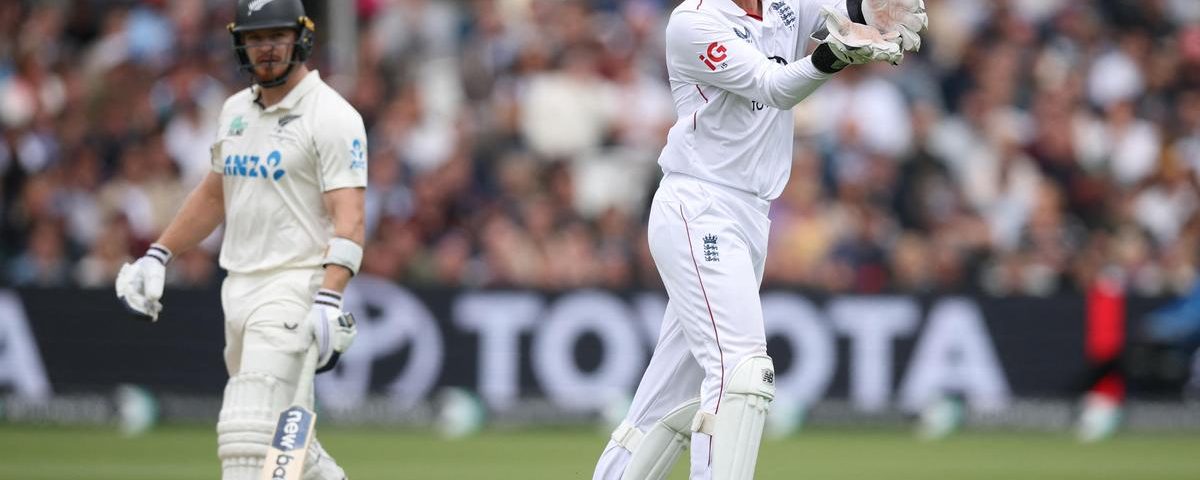
- Jamie Smith’s paternity leave allows James Rew to debut in the Test match against New Zealand.
- Rew is the third debutant in the England lineup, joining Jordan Cox and Sonny Baker.
- This moment highlights the evolving dynamics of cricket and player commitments.
- England's lineup reshuffle could impact their strategy in pivotal Test matches.
- Historical precedents suggest that debutants can significantly influence match outcomes.
In a noteworthy turn of events for the second Test match against New Zealand, Jamie Smith will be stepping away for paternity leave, creating an opportunity for young wicketkeeper-batter James Rew to make his debut. Scheduled for June 17, 2026, this match at the iconic Lord’s cricket ground is expected to draw significant attention, not just for the game itself but also for the fresh talent being introduced into the England squad.
Test match: What You Need to Know
Rew, who has been making waves in county cricket with Somerset, alongside fellow debutants Jordan Cox and Sonny Baker, marks a new chapter for the England team. The decision to debut three players at once speaks volumes about the selectors’ trust in young talent and their willingness to experiment with the lineup. This reshuffle is made even more poignant by the context of a busy cricketing calendar that includes upcoming ODI series and other key tournaments.
This situation is reminiscent of past scenarios in cricket where significant player absences led to fresh faces stepping onto the international stage. Historically, such moments have often been a double-edged sword; while debutants can bring fresh energy and perspective to a team, there is also the inherent risk of inexperience in high-stakes matches.
Historical Context
Looking back, cricket has seen numerous instances where players have had to step up in challenging circumstances. One notable example was during the 2003 World Cup when England’s regular opener was injured, paving the way for an inexperienced player to take the crease. This decision, while risky, turned out to be a masterstroke as the young batsman contributed significantly to the team’s performance.
Similarly, in the Test matches of the late 1990s, several players made debuts due to injuries or personal commitments of established players. The outcomes varied; some newcomers struggled under pressure, while others seized their moment and became mainstays in the team. This historical context is vital as it suggests that while uncertainty surrounds debuts, there are also opportunities for brilliance.
Analysis & Key Takeaways
The statistics speak for themselves; a significant number of debutants have gone on to have illustrious careers, often cementing their places in the team after strong initial performances. Rew’s chance comes at a time when the England team is looking to solidify its position in the Test match rankings, especially with the competitiveness of the BCCI teams looming in the distance.
With Rew’s debut, the England management will not only be observing how he adjusts to the pressures of Test cricket but also how his inclusion might shift the dynamics within the team. The added pressure on older players to guide and mentor the debutants could either unify the squad or lead to disarray, depending on how well the established players respond to the challenge.
As the match approaches, all eyes will be on Rew and his fellow debutants. They stand at the precipice of their cricketing careers, and history suggests that while the path may be fraught with difficulty, it can also lead to extraordinary achievements. The anticipation surrounding their performance will undoubtedly be a talking point in cricket circles, with fans hoping for a display of batting finesse and wicket-taking prowess.
Moreover, the shift in focus from established players to new talent reflects a broader trend in international cricket. Teams are increasingly investing in youth, recognizing that the future of the game lies in nurturing the next generation. This is evident in how national boards, including the BCCI, are prioritizing youth development, ensuring that the pipeline of talent remains robust.
The outcome of this Test match may not only influence the series against New Zealand but could also set the tone for England’s future in international cricket. If Rew makes a mark, it could embolden the selectors to continue this trend of integrating young talent, reshaping the team’s strategy for upcoming ODI series and beyond.
As we delve deeper into this pivotal Test match scenario, our view is that the introduction of debutants during critical fixtures can often act as a catalyst for transformation within the squad. The stress and urgency of a Test match can either forge champions or reveal vulnerabilities. The recent trend of relying on younger talent suggests that England may be in a transitional phase, where the balance between experience and youth is more crucial than ever.<br />
Our anticipation lies in how well Rew and his fellow debutants adapt to this high-pressure environment. Historically, matches that feature debutants can swing dramatically based on their performances, and if they shine, we could see a shift in England's approach moving forward. Regardless of individual outcomes, what remains clear is that this Test match against New Zealand is not just a battle for runs and wickets but also a commentary on the future direction of English cricket.
Source: ENG vs NZ, 2nd Test: Jamie Smith to go on paternity leave; James Rew to make debut
Sports News Plus is a news aggregator. We do not own or claim rights to any images, videos, or source content featured on this site. All images and media are the property of their respective original owners and publishers. Article content is independently written based on publicly available news sources, which are credited and linked throughout. Full disclosure →