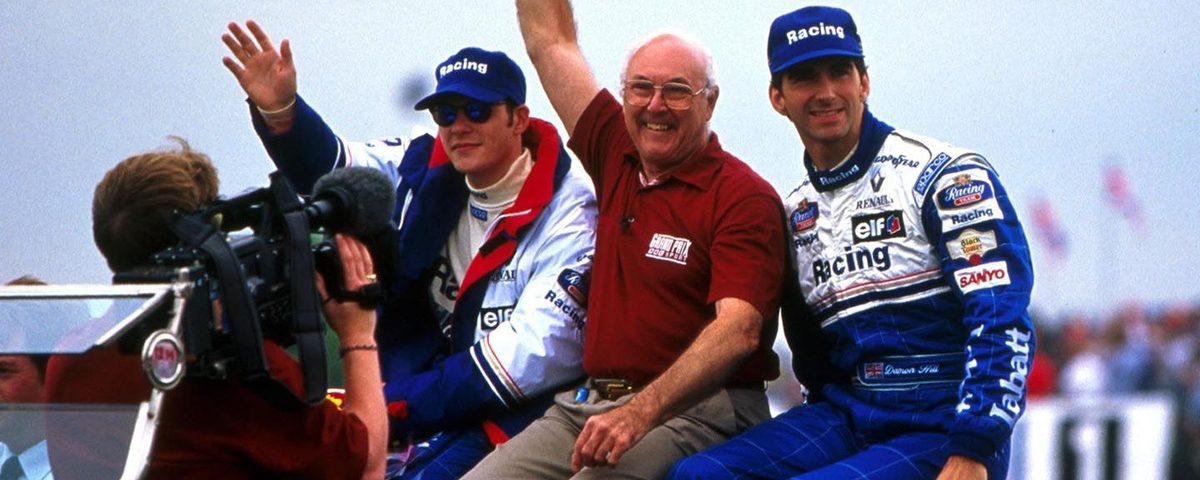
- Jacques Villeneuve faced a tough reality check when competing against Damon Hill at Williams.
- Villeneuve's early successes in IndyCar did not guarantee dominance in Formula 1.
- The rivalry between Villeneuve and Hill was pivotal in shaping their careers.
- Understanding the strategic dynamics of their competition reveals deeper insights into both drivers’ approaches.
- This discussion highlights the critical importance of adaptability in the ever-evolving world of Formula 1.
In a recent interview, Jacques Villeneuve opened up about his initial experiences in Formula 1, particularly his rivalry with Damon Hill during their time at the Williams team. This candid reflection not only highlights the competitive nature of the sport but also provides insight into how two vastly different racing backgrounds can shape a driver’s performance and mentality. Villeneuve, who made his F1 debut in 1996, arrived with a glittering resume from the IndyCar Series, including a championship title and a win at the prestigious Indianapolis 500. However, what followed was a reality check that every aspiring driver fears.
The 1996 season kicked off at the Australian Grand Prix, where Villeneuve secured pole position in his first-ever race. This initial success was a promising sign, yet it was his teammate Hill, the reigning world champion, who ultimately taught him the nuances of racing in Formula 1. The dynamic between the two drivers was complex: Villeneuve was the upstart with a chip on his shoulder, while Hill was the seasoned veteran, accustomed to the pressure of competing at the highest level. This rivalry was not just a clash of personalities; it was a tactical battle that played out on the track.
The Tactical Breakdown of Villeneuve vs. Hill
Understanding the strategic elements of the Villeneuve-Hill rivalry provides a clearer picture of how their competition influenced the outcomes of races throughout that season. Williams, at the time, had a car that was dominant on the grid, allowing both drivers to showcase their skills. However, the differences in their driving styles became apparent during key races.
Villeneuve was known for his aggressive driving style, often taking risks that could either lead to spectacular results or costly errors. In contrast, Hill adopted a more calculated approach, focusing on consistency and race craft. This divergence in tactics was particularly evident during qualifying sessions, where Villeneuve frequently pushed the limits to secure pole positions. Yet, when it came to race results, Hill’s ability to maintain a steady pace and manage tire degradation often gave him the upper hand. This tactical battle illustrated the delicate balance between speed and strategy that defines successful Formula 1 racing.
The 1996 season served as a crucible for both drivers. Villeneuve had to adapt rapidly to the nuances of racing in Formula 1, learning from Hill’s experience and composure. The pressure to perform while competing against a world champion was immense. As the season progressed, it became clear that while Villeneuve had the raw talent, he needed to refine his approach to match Hill’s strategic mindset.
The Legacy of Their Rivalry
The rivalry between Villeneuve and Hill transcended mere competition; it played a significant role in shaping their respective legacies in Formula 1. Villeneuve would go on to win the championship in 1997, demonstrating his growth not just as a driver, but as a competitor who learned to adapt and evolve. Hill, on the other hand, solidified his status as one of the greats of the sport, with a career marked by resilience and tactical mastery.
As we reflect on this pivotal moment in Formula 1 history, it becomes evident that the sport is as much about psychological warfare as it is about speed. Villeneuve’s initial struggles against Hill remind us that even the most talented drivers must navigate the complexities of competition, learning from their rivals to improve their own performance. The lessons learned during this rivalry continue to resonate in today’s Formula 1 landscape, where young drivers face similar challenges in adapting to the rigors of the championship.
The competitive spirit embodied by Villeneuve and Hill is a testament to Formula 1’s rich history. Their story serves as a reminder that success in this sport is not merely about talent; it is also about the ability to learn, adapt, and ultimately find one’s place among the giants of racing.
Our view on the Villeneuve-Hill rivalry encapsulates a broader truth about competitive sports: talent alone does not guarantee success. The psychological and strategic elements that define Formula 1 can often overshadow raw ability. This dynamic is crucial for emerging drivers who aspire to make their mark in the sport.<br />
As we look to the future, the lessons from Villeneuve and Hill’s rivalry may be more relevant than ever. Today's drivers must navigate not only their opponents but also the complex interplay of technology and team dynamics. In a sport where every millisecond counts, the ability to adapt one's strategy mid-race can dictate championship outcomes. We anticipate that this evolving competitive landscape will continue to push the boundaries of what is possible in Formula 1.
Source: Jacques Villeneuve opens up on Damon Hill reality check at Williams
Sports News Plus is a news aggregator. We do not own or claim rights to any images, videos, or source content featured on this site. All images and media are the property of their respective original owners and publishers. Article content is independently written based on publicly available news sources, which are credited and linked throughout. Full disclosure →