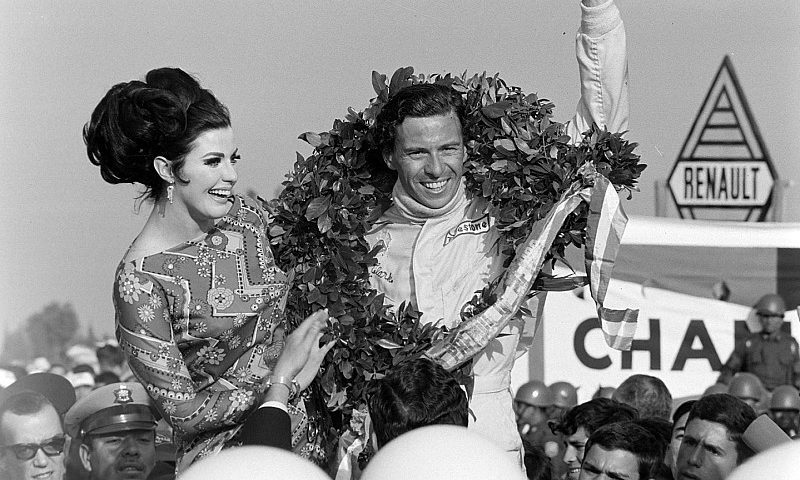
- Jim Clark remains a pivotal figure in Formula 1 history, with 25 wins in just 72 starts.
- His versatile driving style transcended motorsport, impacting Indycar and touring car racing as well.
- Clark's legacy is not just in numbers; it symbolizes the essence of racing excellence.
- The selection of his top drives highlights the evolution of competitive racing strategies.
- Understanding Clark's impact provides insights into the future trajectory of Formula 1 racing.
Jim Clark, the quiet yet formidable Scottish driver, changed the landscape of Formula 1 with his exceptional talent and skill. Born on March 4, 1936, in Kilmany, Scotland, Clark’s career took off in the 1960s when he emerged as a dominant force in the sport. With 25 world championship victories from just 72 starts, Clark’s remarkable race results still secure him a place among the top ten on the all-time F1 wins list. His legacy extends beyond Formula 1; Clark also achieved success in Indycar racing, sports cars, and touring cars, demonstrating his versatility and mastery across various motorsport disciplines.
Jim Clark: What You Need to Know
In celebrating Clark’s legacy, several outlets have recently ranked his top ten drives, showcasing the defining moments of a career that has left an indelible mark on motor racing. These historic races not only highlight Clark’s extraordinary skills but also reflect the evolution of Formula 1 and the changing dynamics of race strategies over the decades. Understanding these moments provides us with a unique insight into how the sport has transformed and what might lie ahead for future champions.
Historical Context
The impact of Jim Clark’s driving prowess can be contextualized by examining similar pivotal moments in Formula 1 history. One notable comparison is the era of Juan Manuel Fangio, who dominated the sport in the 1950s. Fangio’s success, like Clark’s, was marked by a combination of technical skill, an intuitive understanding of race dynamics, and a deep connection with his vehicles. Both drivers faced challenges that tested their resolve, including mechanical failures and fierce competition. Fangio’s five World Championships and his record of 24 wins set a benchmark for future generations, much like Clark’s achievements did in the 1960s.
Analysis & Key Takeaways
Looking at the evolution of race results and championship standings, we can also draw parallels with Michael Schumacher’s reign in the late 1990s and early 2000s. Schumacher’s dominance was characterized by strategic brilliance and an unparalleled work ethic, leading to seven World Championships and 91 race victories. The era of Schumacher saw significant advancements in technology and team dynamics, setting a new standard for what it meant to be a Formula 1 champion. Just as Clark’s formidable presence reshaped racing strategies in his time, Schumacher’s era pushed the boundaries of performance and engineering in the sport.
Has this phenomenon of legacy-driven evolution occurred before? Absolutely. The history of Formula 1 is punctuated by champions who not only set records but also inspired future generations of drivers and teams. The aftermath of Clark’s untimely death in a tragic accident in 1968 saw a dramatic shift in safety protocols and vehicle design, forever changing how the sport approached driver safety. Following the loss of such a pivotal figure, the sport rallied to honor his legacy, resulting in innovations that prioritized the well-being of drivers, shaping modern Formula 1 as we know it today.
Future Implications
The lessons learned from Clark’s career and those of other legends suggest that the sport will continue to evolve. As the landscape of Formula 1 becomes increasingly competitive, the next generation of drivers will undoubtedly draw inspiration from Clark’s tenacity and skill. With new technological advancements and a focus on sustainability, the future of the championship promises to be as thrilling and transformative as Clark’s own era.
In conclusion, Jim Clark’s remarkable contributions to Formula 1 offer valuable insights not only into the past but also into the future of the sport. His legacy as a driver transcends mere statistics; it serves as a reminder of the spirit of competition, innovation, and the pursuit of excellence that defines Formula 1. As we look ahead, understanding the historical context of legendary drivers like Clark will help fans and analysts alike to appreciate the nuances of the sport and its continuous evolution.
At our editorial desk, we find ourselves reflecting on how Jim Clark's influence can still be felt in today's Formula 1 landscape, especially as drivers like Lewis Hamilton and Max Verstappen continue to push the limits of performance. The ongoing evolution of racing technology and strategy echoes the groundbreaking approaches championed by Clark, illustrating a lineage of innovation that is vital to the sport's growth.<br />
Every generation of racers builds upon the legacies of their predecessors, often taking inspiration from the defining moments that shaped Formula 1 history. Just as Clark inspired a generation of drivers with his achievements, today's racers are likely to look back at his drives as they aspire to create their own legacies. As we forecast the future of Formula 1, it is crucial to remember the champions who paved the way, as they will always serve as a benchmark against which the new legends will be measured.
Source: Ranked! The legendary Jim Clark’s top 10 drives
Sports News Plus is a news aggregator. We do not own or claim rights to any images, videos, or source content featured on this site. All images and media are the property of their respective original owners and publishers. Article content is independently written based on publicly available news sources, which are credited and linked throughout. Full disclosure →