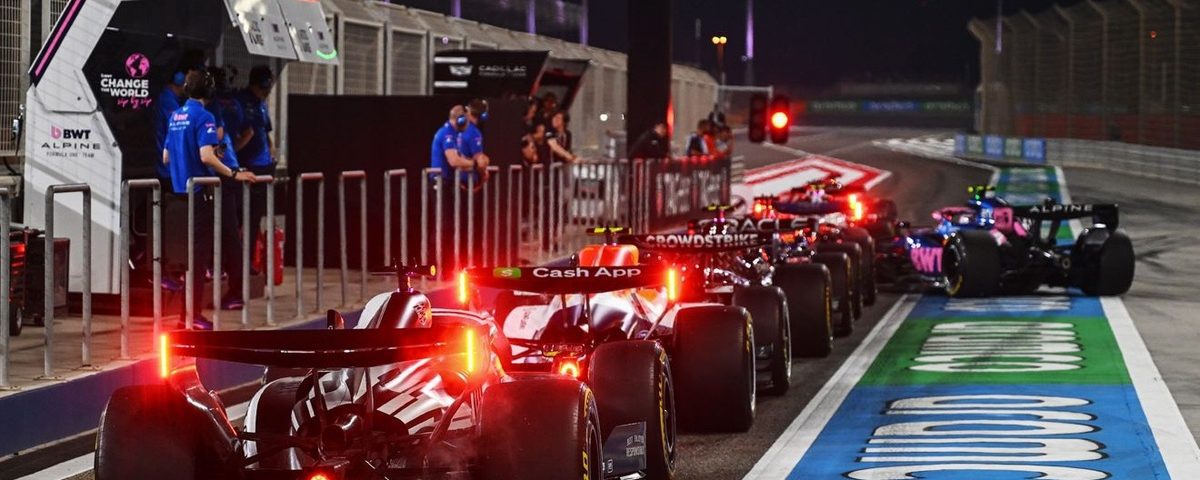
- The cancellation of the Bahrain and Saudi Arabian races alters the trajectory of the 2026 Formula 1 championship.
- Historical data shows that similar cancellations have significant implications for race results and driver standings.
- Teams must adapt quickly to maintain their momentum as the season progresses.
- The unique characteristics of the Bahrain and Saudi Arabian circuits could have influenced qualifying and race results.
- The Formula 1 championship's dynamics are unpredictable, making every race crucial for title contenders.
The world of Formula 1 is buzzing with the recent announcement regarding the cancellation of two significant races in Bahrain and Saudi Arabia, initially scheduled for the 2026 season. This development poses questions about the continuity of the championship, the competitive landscape, and how teams will navigate this unexpected turn of events. With the opening rounds already revealing emerging trends and pecking orders among drivers and teams, the absence of these races could dramatically shift the championship’s trajectory.
Formula 1: What You Need to Know
The Bahrain International Circuit and the Jeddah Corniche Circuit in Saudi Arabia are known for their fast-paced, exciting layouts, which often lead to thrilling qualifying sessions and race outcomes. The unique characteristics of these tracks favor specific team setups and driving styles, and their cancellation means that teams will have to recalibrate their strategies as they move forward in the championship.
The impact of these cancellations extends beyond mere statistics; it affects the psychological stance of drivers and teams. With fewer opportunities to score points, the margin for error becomes even thinner as the season progresses. Teams that were poised for a strong showing in these races now face the daunting task of compensating for lost points in the remaining events.
Historically, Formula 1 has seen similar disruptions in the past. One notable example occurred in 2020 when the COVID-19 pandemic forced the cancellation of multiple races, including the Australian Grand Prix, which was set to open the season. The eventual reshaping of the calendar led to a series of double-header weekends and a more compact championship schedule. The outcome was a season that saw the emergence of unexpected contenders and a recalibrated competitive landscape.
These historical precedents provide valuable insights into what might transpire following the cancellations in Bahrain and Saudi Arabia. The 2020 season illustrated that while cancellations can disrupt momentum, they also create opportunities for teams to regroup and reassess their strategies.
As we reflect on the implications of the recent cancellations, it’s essential to consider how they will affect the remaining races. Will teams like Mercedes and Red Bull, traditionally strong at these circuits, struggle to maintain their advantage, or will underdogs find unexpected ways to capitalize on the new landscape? The upcoming races will undoubtedly be crucial, as every point is vital in the quest for the championship.
Analysis & Key Takeaways
Another aspect to consider is the potential changes in qualifying procedures. With fewer races on the calendar, each qualifying session becomes even more critical. Teams will need to maximize their performance in these sessions to ensure they start in favorable positions. The pressure will be on drivers and teams alike to deliver peak performances consistently.
Looking at the championship standings, the absence of points from the two canceled races means that the leaderboards may not accurately reflect a team’s true performance capabilities. This could lead to a more competitive mid-field battle, as teams that might have struggled at these circuits can reassess their strategies and aim for better outcomes in subsequent races.
The historical context of interruptions in the Formula 1 calendar shows that adaptability will be key. Teams that can innovate and quickly adapt to new circumstances will likely emerge stronger in the long run.
In summary, while the cancellations of the Bahrain and Saudi Arabian races are undoubtedly disappointing, they present an opportunity for the teams and drivers to recalibrate and focus their efforts on the remaining races. It is this unpredictability that makes Formula 1 so captivating, as each race can change the dynamic of the championship in unexpected ways.
As we look ahead, it will be fascinating to see how the teams respond to this challenge. Will they rise to the occasion, or will the pressure prove too much? One thing is certain: the road to the championship is now more convoluted, and every race will be a critical juncture for those vying for the title.
Our editorial desk sees the cancellation of the Bahrain and Saudi Arabian races as a pivotal moment in the 2026 Formula 1 championship. While disruptions are not new to the sport, the response from teams will be critical. In the past, we've observed that uncertainty can lead to both innovation and pressure-induced mistakes.<br />
We anticipate that the teams who best understand their cars’ setups and have adaptable strategies will gain an edge in the remaining races. The psychological game will play a critical role as well—drivers must maintain their focus despite the disappointment of lost races. Ultimately, this situation sets the stage for a season that could be as unpredictable as it is thrilling, with every race now holding the weight of greater significance.
Source: How the Bahrain and Saudi Arabian races might have unfolded
Sports News Plus is a news aggregator. We do not own or claim rights to any images, videos, or source content featured on this site. All images and media are the property of their respective original owners and publishers. Article content is independently written based on publicly available news sources, which are credited and linked throughout. Full disclosure →