- Varun and Harshit Rana will miss the remaining T20I matches against England due to hamstring injuries.
- The absence of both players raises questions about India's bowling depth in the series.
- Historical data shows that injuries can significantly affect a team's win rates in international cricket.
- India’s performance in T20 formats has been inconsistent recently, prompting calls for strategic changes.
- Looking ahead, the BCCI will need to assess player fitness to avoid further setbacks in upcoming ODIs and test matches.
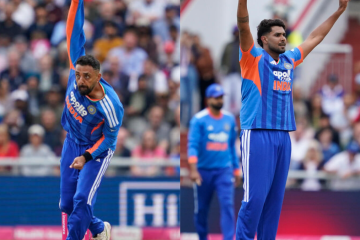
In a significant blow to the Indian cricket team, Varun and Harshit Rana will be sidelined for the remainder of the T20I series against England due to hamstring injuries sustained during the third match. This news broke on July 9, 2026, as the team prepares for the concluding games in the series, which take place at Edgbaston, Birmingham. The injuries come at a crucial juncture, with India seeking to regain momentum after a mixed start in the series.
The absence of these two players not only raises concerns about the team’s immediate performance but also highlights a broader issue regarding player fitness and injury management within the squad. Varun, known for his impactful bowling, has been a key player in India’s T20 format, while Harshit Rana has emerged as a promising talent in the recent ODI series. Their injuries could create gaps in the lineup that England may exploit.
India’s reliance on a few core players can be viewed as a double-edged sword. On one hand, a consistent team can build chemistry and improve performance metrics, but on the other, it also heightens the risk of disruption from injuries. According to historical data, teams that have suffered significant player injuries tend to see a drop in their win rates. For instance, India’s win percentage in T20 matches has fluctuated between 60% and 70% over the past few years, with injuries often coinciding with dips in performance.
Injury Impact on Team Strategy
The upcoming matches will necessitate tactical adjustments by the coaching staff. With Varun’s absence, the team may need to consider calling upon less experienced bowlers or reshuffling the current squad. The Board of Control for Cricket in India (BCCI) has a crucial role to play in ensuring that the players selected in their place can rise to the occasion and perform under pressure.
Given the current squad’s dynamics, the inclusion of a younger player could also provide an opportunity to gauge the future potential of the team. India has a rich history of nurturing talent; recent players have made their mark in international cricket following initial appearances in T20 formats. The importance of this series extends beyond immediate results; it is a chance to develop a deeper bench of players who can support the team’s ambitions in both the upcoming ODI series and the test matches that follow.
Performance Trends and Future Implications
India’s recent performance trends in T20I matches show a mixed bag of results. While some players have stepped up, the inconsistency often stems from a lack of depth in the squad, particularly in high-pressure situations. The team’s scoring averages have fluctuated, and they have often struggled to convert strong starts into match-winning performances.
The situation is further complicated when considering the upcoming ODI series, where squad fitness will be paramount. Historically, teams that have managed their player workloads and minimized injuries have fared better in long-term competitions. As the BCCI prepares for future matches, they must prioritize player welfare and consider implementing strategies that can mitigate injury risks.
Analyzing recent trends, we can see that effective injury management correlates with success rates. The reliance on a core group of players, while beneficial for immediate wins, could jeopardize the team’s long-term aspirations if not handled with care. The BCCI will need to reassess player fitness protocols and explore more comprehensive recovery programs to ensure that the team’s strengths are preserved.
As we look forward, it’s essential for India to recognize the underlying patterns in their performances and the impact of injuries on team dynamics. The upcoming matches against England will be a test not only of skill but also of the team’s resilience and adaptability in the face of adversity.
In our view, the injuries to Varun and Harshit Rana serve as a stark reminder of the fragility of player fitness in high-stakes cricket. It’s imperative for the BCCI to take a proactive approach in developing a robust injury management program that can sustain player fitness throughout the demanding cricket calendar. This series against England offers a unique opportunity to experiment with emerging talents, which could yield long-term benefits as the team prepares for the World Cup.<br />
We also believe that the focus should not solely be on the immediate consequences of these injuries but rather on how the team can evolve. The cricketing landscape is ever-changing, and India must adapt by fostering depth within the squad. The lessons learned from this series could shape the future of Indian cricket, ensuring that the team remains competitive on the international scene and capable of dealing with setbacks gracefully.
Source: Varun, Harshit Rana out of rest of T20I series against England
Sports News Plus is a news aggregator. We do not own or claim rights to any images, videos, or source content featured on this site. All images and media are the property of their respective original owners and publishers. Article content is independently written based on publicly available news sources, which are credited and linked throughout. Full disclosure →