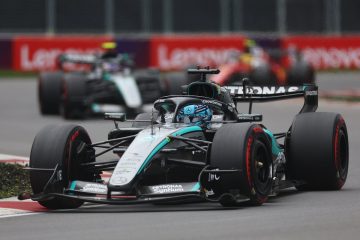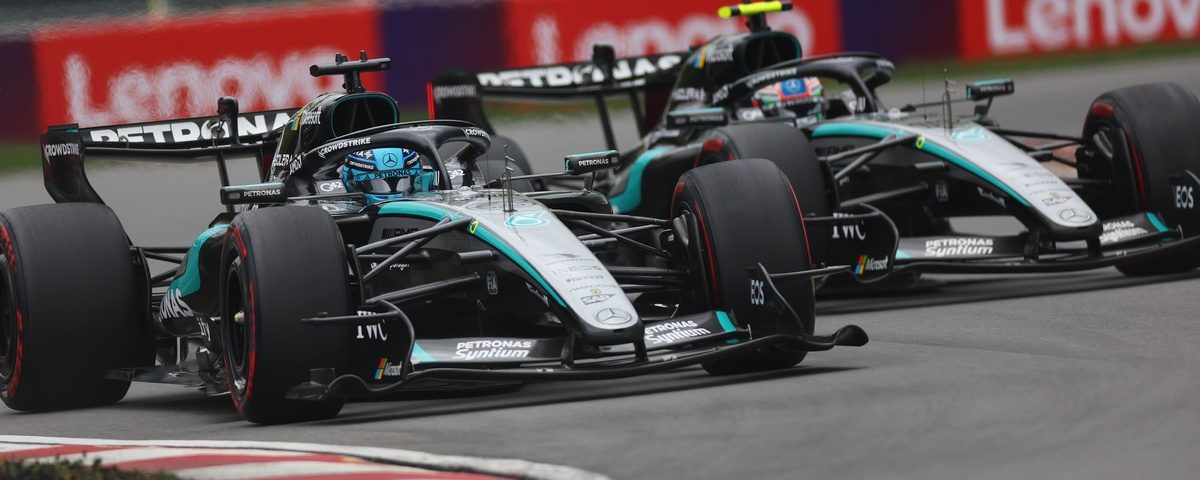
- George Russell suffered a heartbreaking exit while leading the Canadian Grand Prix.
- His teammate Kimi Antonelli secured another victory, tightening the championship race.
- The incident raises questions about Mercedes' reliability during critical moments.
- The strategic implications of this race could affect the qualifying tactics for upcoming events.
- Russell must regroup to stay competitive in the championship as the season progresses.
Formula 1 In a dramatic turn of events at the 2026 Canadian Grand Prix, George Russell, the Mercedes driver, faced a heartbreaking exit while leading the race. On lap 30, Russell was in a commanding position when his car suffered a critical failure, forcing him to abandon the race at Turn 9. This abrupt withdrawal not only ended Russell’s hopes for his first victory of the season but also significantly impacted the unfolding championship narrative, with his teammate Kimi Antonelli seizing the opportunity to secure another win.
The Canadian Grand Prix, held on May 24th, 2026, at the Circuit Gilles Villeneuve in Montreal, was a pivotal race for the championship, and Russell’s misfortune changed the dynamics for the Mercedes team. Up to that point, Russell had shown formidable pace throughout the weekend, bolstered by strong qualifying efforts that positioned him well for a potential victory. However, as the race unfolded, it became painfully clear that in Formula 1, even the most meticulously planned strategies can be derailed in an instant.
The implications of Russell’s exit extend beyond just one race. With Antonelli claiming the win, the championship landscape has tightened significantly. This victory not only adds points to Antonelli’s tally but also serves to boost team morale within Mercedes, especially considering the competitive nature of the 2026 season. As teams prepare for the next race, all eyes will be on how Russell and the Mercedes engineering team respond to this setback.
Tactical Breakdown of the Canadian Grand Prix
Analyzing the strategic dimensions of the Canadian Grand Prix, it becomes evident that Russell’s race was defined by a combination of pace and strategy. The Mercedes team had been focusing on optimal tire management and track position, which had worked effectively during qualifying. Russell’s lead indicated that the team had executed their strategy well, and he was on course to capitalize on this with a strong finish.
However, the technical failure that forced Russell to retire was a stark reminder of the vulnerabilities inherent in high-stakes racing. The straight-line speed and downforce of the Mercedes car have been critical advantages in previous races. Still, the failure to maintain reliability under racing conditions raises questions about future race strategy, particularly in terms of how the team will approach qualifying sessions and tire choices moving forward.
Moreover, Russell’s exit opens up a tactical gap that other teams may exploit in the coming races. With Antonelli now in the lead, his approach to managing the race pace will likely shift towards a more defensive strategy, focusing on maintaining position rather than outright speed. This could influence how other teams deploy their drivers against the Mercedes duo in future races, especially if they need to alter their tactics to counter the new championship leader.
The Road Ahead for Russell and Mercedes
As the Formula 1 season progresses, George Russell’s mindset will be crucial in determining his performance in the upcoming races. This incident at the Canadian Grand Prix serves as a wake-up call for the team, highlighting the importance of both speed and reliability in their championship bid.
Moving forward, the Mercedes team will need to re-evaluate their engineering approaches to ensure that they do not encounter similar failures in future races. Russell’s focus will also need to shift towards establishing a more resilient driving style that can withstand the pressures of leading a race. The mental aspect of racing cannot be overstated; Russell must channel his frustration into motivation to reclaim his position as a title contender.
In the world of Formula 1, the road to the championship is often fraught with unexpected challenges. Russell’s exit from the Canadian GP is a poignant reminder of this reality. As we look ahead to the next races, fans and analysts alike will be closely watching how both Russell and Antonelli navigate this tightly contested championship, with every point and every race potentially rewriting the narrative of the season.
From our perspective, the fallout from Russell's dramatic exit can’t be understated. This incident not only reshapes the immediate championship standings but also brings to light the intricate balance between performance and reliability that teams must navigate in Formula 1. The psychological impact on Russell cannot be overlooked; how he rebounds from this disappointment will be critical for his championship aspirations.<br />
Moreover, this situation presents an intriguing scenario for Mercedes. With the ever-looming threat of reliability issues now on the table, it begs the question: how will they adjust their strategy for the next races? We believe that their engineers will be under immense pressure to fine-tune their systems. If they can manage to ensure stability while maintaining performance, they could still emerge as title favorites. Conversely, if these issues persist, it could open the door for rivals to capitalize throughout the remainder of the season.
Source: Russell suffers dramatic exit from F1 Canada GP
Sports News Plus is a news aggregator. We do not own or claim rights to any images, videos, or source content featured on this site. All images and media are the property of their respective original owners and publishers. Article content is independently written based on publicly available news sources, which are credited and linked throughout. Full disclosure →