- Mercedes has struggled at race starts, impacting its championship strategy.
- The team has yet to lead a race after starting from pole this season.
- Historical parallels suggest race-start improvements can lead to championship success.
- Addressing starting issues is crucial for maintaining a competitive edge.
- A successful resolution of these challenges could redefine the team's season trajectory.
Formula 1 Mercedes AMG Petronas Formula One Team has faced unexpected hurdles during the 2026 season, notably in their race-start performances. Despite securing pole positions at various Grands Prix, the team has struggled to maintain its lead when the lights go out. This issue came to light particularly with young driver Kimi Antonelli, who, despite showing promise, found himself losing ground early in races. The team has yet to lead at the end of the first lap this season, raising concerns about their overall race strategy as they aim to reclaim their dominance in Formula 1.
Race starts are critical moments in Formula 1, often setting the tone for the rest of the race. For a team that has historically enjoyed a competitive advantage in qualifying, the inability to convert pole positions into early race advantages suggests an area that requires immediate attention. The recent performance issues have brought to the forefront the importance of meticulous preparation and execution during these crucial moments. If Mercedes wishes to contend for the championship, addressing these race-start weaknesses will be imperative.
Historical Context: Lessons from the Past
Historically, many elite teams in Formula 1 have encountered similar challenges at race starts. For instance, in the late 1990s, McLaren faced significant difficulties with their race starts, particularly with drivers like Mika Hakkinen. Despite their pace and qualifying prowess, they often fell victim to poor starts that resulted in lost positions and missed championship opportunities. However, through rigorous analysis and adjustment, McLaren transformed their approach, ultimately leading them to a series of championships.
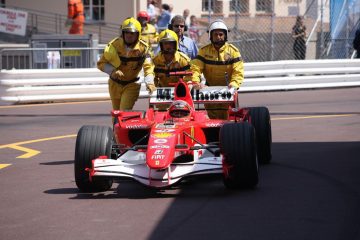
Another illustrative case is that of Ferrari during the 2006 season. The Scuderia struggled initially with their race-start strategy, with Fernando Alonso often capitalizing on their mistakes. After addressing their race-start protocols, Ferrari not only improved their performance but also secured the constructors’ title that year. These historical examples highlight that while race-start issues can jeopardize championship aspirations, they are not insurmountable. With focused efforts and strategic adjustments, teams have previously turned their fortunes around and emerged victorious.
The current situation for Mercedes mirrors these past struggles. The team has the technical knowledge and resources to make necessary changes. Their engineering department can work to refine the car’s clutch and launch control systems, ensuring better traction and acceleration off the line. Given the team’s rich history of racing excellence, it is reasonable to expect that they will take decisive action to improve their race-start performances, a vital component of their championship strategy.
The Road Ahead: Potential Outcomes for Mercedes
As the season progresses, the stakes for Mercedes are higher than ever. With the championship on the line, the need for improved race starts is not merely about immediate results; it’s about the broader implications for the team’s competitive standing. The potential fallout from continued underperformance in this area could resonate throughout the rest of the season, possibly affecting driver confidence and team morale.
The upcoming races present an opportunity for Mercedes to implement changes and test their effectiveness under pressure. With the next GP on the horizon, all eyes will be on how the team approaches their race starts. Will they stick with their current strategies, or will they pivot to a more aggressive approach that prioritizes flawless starts? Whatever the decision, it is clear that the ability to capitalize on qualifying positions will be crucial for their championship aspirations.
In the world of Formula 1, every second counts, and the margin between success and failure is razor-thin. As Mercedes seeks to overcome its race-start challenges, the historical context of similar struggles serves as both a cautionary tale and a source of inspiration. They must adapt quickly, leveraging their resources and expertise to transform this vulnerability into a strength, ultimately aiming for the top of the podium once again.
Our view on Mercedes' current predicament revolves around the critical nature of race starts in Formula 1. We believe that while their performance has been sluggish off the line, it offers an opportunity for growth. Teams that have faced similar challenges in the past have often emerged stronger, reinforcing the idea that adversity can be a catalyst for improvement. If Mercedes can rectify its race-start issues swiftly, they could regain momentum in the championship fight, turning a potential crisis into a defining moment of resilience.<br />
Moreover, this situation underscores a broader narrative in Formula 1: the ever-present need for innovation and adaptation. As teams refine their strategies, the ability to respond to weaknesses can often determine the outcome of a season. We anticipate that Mercedes will capitalize on this moment to elevate their performance, showing that they are not just a team of the past but one that still has the capability to shape the future of the sport.
Source: How Mercedes has worked to solve its F1 weakness
Sports News Plus is a news aggregator. We do not own or claim rights to any images, videos, or source content featured on this site. All images and media are the property of their respective original owners and publishers. Article content is independently written based on publicly available news sources, which are credited and linked throughout. Full disclosure →