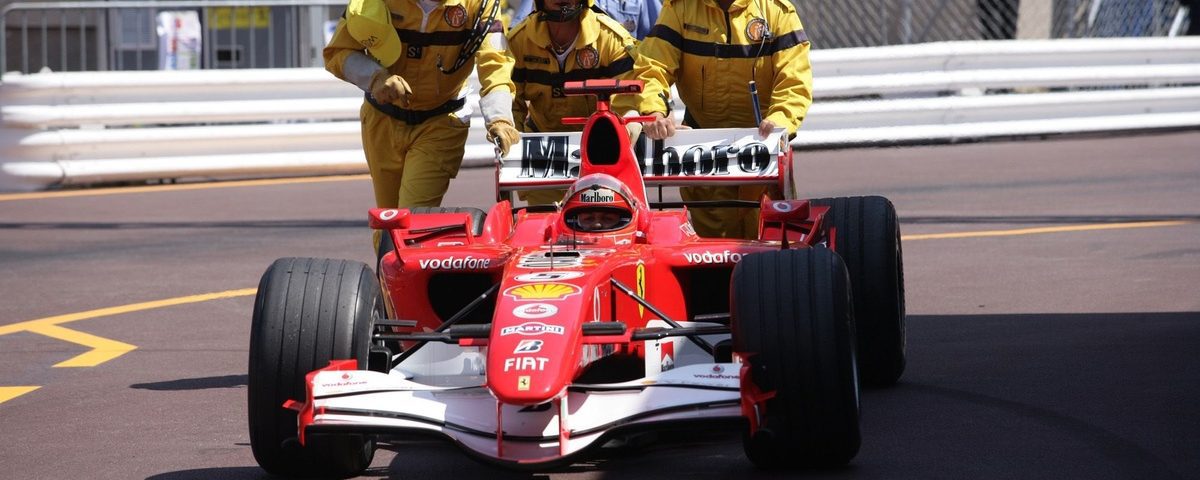
- Michael Schumacher's final unsportsmanlike maneuver occurred during the 2006 Monaco Grand Prix.
- This incident highlighted the intense pressure and high stakes within Formula 1 championships.
- Historical parallels can be drawn to past controversial moments in F1 that shaped the sport's reputation.
- The outcome of Schumacher's actions ultimately influenced the trajectory of his championship battle with Fernando Alonso.
- Understanding these historical precedents can provide insight into current F1 dynamics and driver behavior.
On May 27, 2006, during the Monaco Grand Prix, Michael Schumacher delivered a controversial moment that would become infamous in Formula 1 history. In a shocking turn of events, Schumacher, who was already trailing championship leader Fernando Alonso by 15 points, appeared to deliberately cause a crash late in the qualifying session. This incident ultimately led to his pole position being secured under questionable circumstances, igniting debates about sportsmanship and ethics in the sport. The repercussions of this act echoed throughout the season and altered the trajectory of his championship battle.
Formula 1: What You Need to Know
To fully appreciate the implications of Schumacher’s actions, it is essential to place this incident within the broader context of Formula 1 history. The Monaco Grand Prix, renowned for its narrow streets and challenging turns, has often served as the backdrop for both exhilarating performances and dramatic controversies. Schumacher, known for his unparalleled skill and tactical acumen, found himself in a precarious position as he faced the relentless rise of Alonso, who was establishing himself as a formidable rival. This scenario was not an isolated incident; rather, it reflected a pattern of high-stakes maneuvering that has characterized Formula 1 for decades.
Historical Context
The drama surrounding Schumacher’s unsportsmanlike maneuver brings to mind several past incidents that have similarly divided fans and analysts. One notable example is the 1994 Australian Grand Prix, where Schumacher’s aggressive driving style led to a collision with Damon Hill, ending both their races and ultimately securing Schumacher’s first championship title. Just as in 2006, the tension between ambition and sportsmanship was palpable, leaving fans to grapple with the duality of Schumacher’s extraordinary talent and contentious tactics.
Analysis & Key Takeaways
Another significant moment occurred during the 1997 European Grand Prix when Schumacher collided with Jacques Villeneuve in a bid to claim the championship. His actions resulted in immediate backlash and a disqualification from the championship standings, illustrating the long-lasting consequences of unsportsmanlike conduct. These incidents serve as a reminder that while the pursuit of victory in Formula 1 can ignite unparalleled passion, it can also lead to infamy and tarnish a driver’s legacy.
The outcomes of these historical events underscore a crucial aspect of Formula 1: the fine line between aggressive racing and unsportsmanlike behavior. Drivers who prioritize victory above ethical considerations often find themselves embroiled in controversy, facing the scrutiny of fans and officials alike. The repercussions can be severe, ranging from reputational damage to tangible penalties that impact championship standings. Schumacher’s actions in 2006 were no exception, as they not only drew criticism from fans and commentators but also fueled discourse about the need for ethical standards in racing.
As the 2006 season unfolded, Schumacher’s decision to prioritize championship points over integrity sparked conversations about the evolving nature of competition in Formula 1. With the sport constantly under scrutiny, the question remains: how do drivers balance the relentless pursuit of victory with the principles of fair play? The answer lies in the historical context of Formula 1 and the lessons learned from pivotal moments like Schumacher’s final controversial act.
In the years since Schumacher’s departure from the sport, Formula 1 has evolved, with an increased emphasis on transparency and accountability. The FIA has implemented stricter regulations to deter unsportsmanlike behavior, aiming to nurture a culture of respect among competitors. Yet, as history continues to repeat itself, challenges remain. The pressure on drivers to win is as palpable today as it was during Schumacher’s reign, and the potential for ethical dilemmas persists.
In examining Schumacher’s legacy, it is essential to recognize both his monumental achievements and the moments that have sparked debate. His final unsportsmanlike maneuver serves as a cautionary tale for future generations, reminding us that the path to greatness in Formula 1 is not solely defined by race results, but also by the integrity with which those results are achieved.
As we reflect on Schumacher's controversial legacy, it is clear that his actions continue to resonate in the world of Formula 1. This incident serves as a lens through which we can examine the changing dynamics of competition in the sport. With the rise of data-driven strategies and team dynamics, drivers today face unprecedented pressure to perform at their best. However, as history has shown us, the question of ethics in racing remains a persistent challenge.<br />
We believe that understanding these historical precedents can provide valuable insights into the behavior of current drivers. As Formula 1 continues to evolve, the narrative surrounding sportsmanship will likely remain at the forefront of discussions concerning the sport. The balance between aggression on the track and the principles of fair play will always be a delicate one, and it is imperative that drivers and teams navigate this terrain with care to maintain the integrity of Formula 1.
Source: On this day: Michael Schumacher’s final unsportsmanlike manoeuvre
Sports News Plus is a news aggregator. We do not own or claim rights to any images, videos, or source content featured on this site. All images and media are the property of their respective original owners and publishers. Article content is independently written based on publicly available news sources, which are credited and linked throughout. Full disclosure →