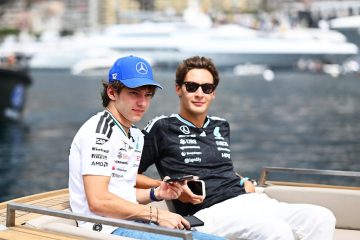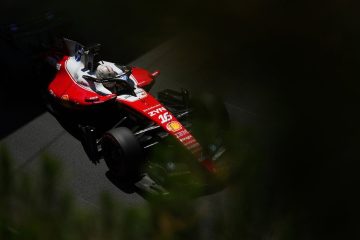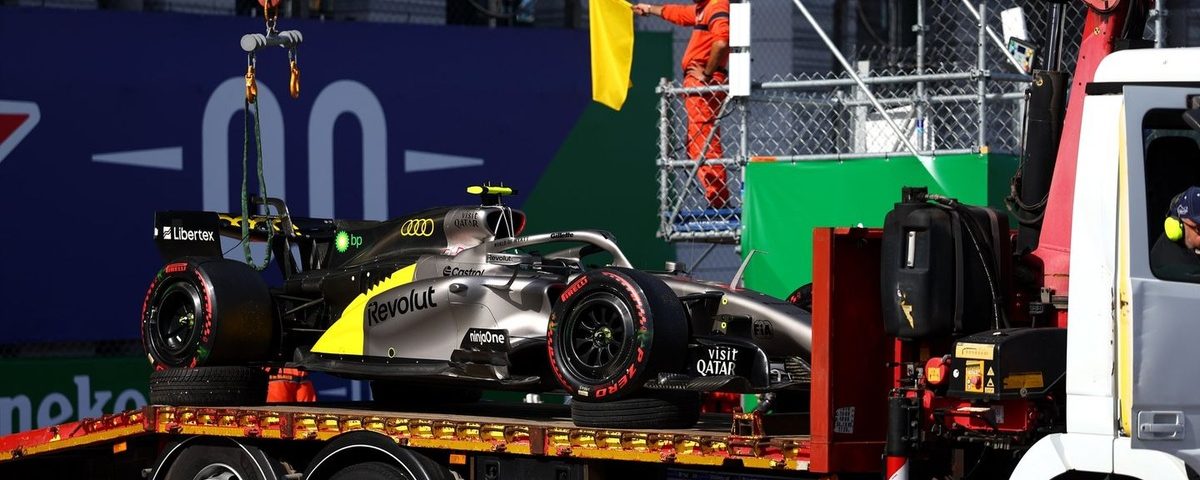
- Gabriel Bortoleto expressed frustration over his crash during Monaco's qualifying session.
- The Audi team saw potential for points but faced setbacks after Bortoleto's incident.
- Historical parallels reveal that similar crashes have often altered championship trajectories.
- The impact of risk-taking in Formula 1 can lead to both great rewards and devastating losses.
- Moving forward, teams must balance ambition with strategy to optimize race results.
Formula 1 At the recent Monaco Grand Prix, Gabriel Bortoleto found himself at the center of a storm after a crash in the qualifying round that left him both frustrated and questioning his approach to risk in Formula 1. Competing on June 6, 2026, the Audi driver was hoping to capitalize on the unique challenges of the iconic street circuit, where his team had previously shown promise. Though the Audi power deficit had not been as significant here as in other circuits, Bortoleto’s unfortunate incident dashed hopes for a strong race result and added to the team’s struggles to break into the points.
Formula 1: What You Need to Know
Bortoleto’s anger was palpable as he reflected on the crash: “Why do I take that much risk?” His question resonates deeply within the high-stakes world of Formula 1, where the line between ambition and recklessness is often razor-thin. After completing all three practice sessions in the top 10, both Bortoleto and veteran teammate Nico Hülkenberg were eager to prove their capabilities when it mattered most. However, with each race, the margin for error shrinks, and the consequences of mistakes become increasingly dire.
The Monaco Circuit is notorious for its tight corners and unforgiving barriers, making it a treacherous playground for drivers. Bortoleto’s incident serves as a stark reminder of the inherent risks in F1, where even minor misjudgments can lead to major setbacks. Looking back at similar moments in Formula 1 history, we can draw lessons from previous incidents that have had lasting implications for both drivers and teams.
Historical Context
In 1994, Ayrton Senna’s tragic crash at Imola remains one of the most pivotal moments in Formula 1 history. Much like Bortoleto, Senna was a driver known for his relentless pursuit of victory. Yet, that fateful day changed the trajectory of the sport, leading to sweeping safety changes in the years that followed. While Bortoleto’s crash did not invoke the same level of consequence, it highlights the ongoing debate about risk versus reward that has plagued drivers for decades.
Analysis & Key Takeaways
Another noteworthy incident occurred in 2008 when Lewis Hamilton crashed during the Monaco Grand Prix. Hamilton, who was leading the championship at the time, faced severe repercussions after his collision. The aftermath saw a dip in his performance, which almost cost him the championship title that year. In both instances—Senna’s and Hamilton’s—we see a common theme: the influence of a single race result on a championship campaign. Bortoleto’s crash could have similar ramifications, depending on how he and his team regroup in the coming races.
Moreover, Bortoleto’s situation prompts us to examine the psychological pressures that drivers face at every turn. The need to assert themselves in a competitive environment can sometimes lead to overdriving—pushing the limits of both the car and their own capabilities. This delicate balance between aggression and caution is a hallmark of successful drivers, and it is clear that Bortoleto will need to reflect on his approach if he wishes to make a significant impact in the championship standings.
As we look to future races, Bortoleto’s experience in Monaco may serve as a crucial learning opportunity—not just for him but for the entire Audi team. The ability to rebound from a setback is vital in Formula 1, where the next race is always just around the corner. Teams must synthesize ambition with calculated risks to ensure that they remain competitive without compromising their chances.
In conclusion, the Monaco Grand Prix crash serves as a reminder of the high-stakes nature of Formula 1. For Bortoleto, it is a moment to ponder the question of risk and its consequences. As the season progresses, how he adapts and learns from this experience will likely define his future performances and, potentially, his career trajectory in the championship.
At the SNP editorial desk, we view Bortoleto's crash as indicative of a broader trend in Formula 1 where the pressure to perform can sometimes lead to hasty decisions. The narrow confines of the Monaco circuit exacerbate this situation, but it raises an important question: Should teams enforce stricter strategies that prioritize consistent performance over risky maneuvers? It's a delicate balance that requires both drivers and teams to reconsider their approach.<br />
Furthermore, we wonder how this incident will shape Audi's strategy moving forward. With a modest point tally, the team should reassess their risk management. Emphasizing conservative driving in qualifying could yield better results and set the stage for more fruitful race days. As Bortoleto reflects on his crash, it’s clear that lessons learned here could resonate through the paddock as teams navigate the unpredictable landscape of Formula 1.
Source: Gabriel Bortoleto angry over costly Monaco Q1 crash: 'Why do I take that much risk?'
Sports News Plus is a news aggregator. We do not own or claim rights to any images, videos, or source content featured on this site. All images and media are the property of their respective original owners and publishers. Article content is independently written based on publicly available news sources, which are credited and linked throughout. Full disclosure →