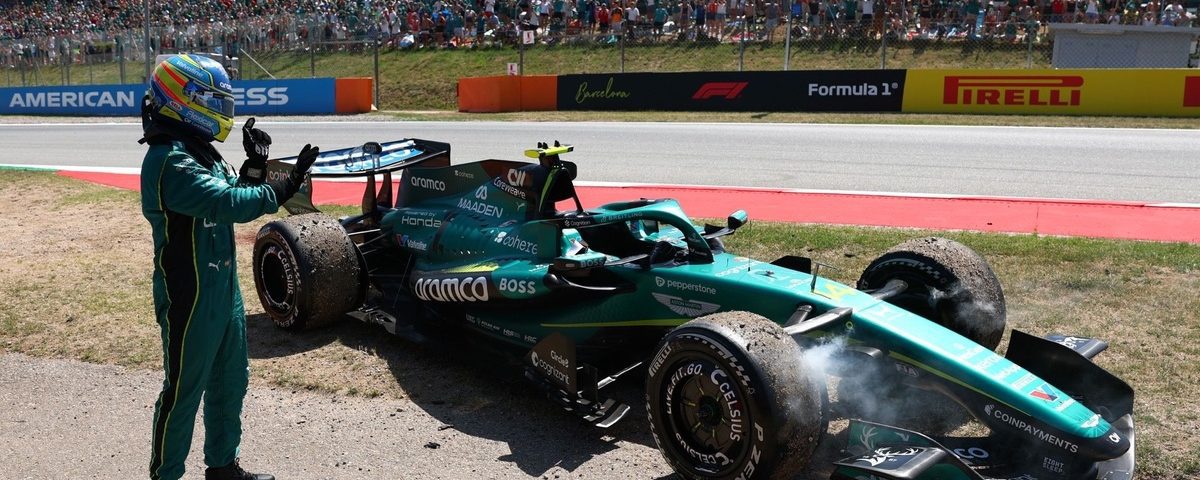
- Aston Martin's performance deficits were starkly evident in Monaco and Barcelona.
- The AMR26's struggles are closely tied to Honda’s power unit limitations.
- Team principal Mike Krack acknowledged a lack of optimism regarding future improvements.
- The contrasting circuits highlighted persistent issues with car setup and performance.
- The team must adapt quickly, or risk falling further behind in the championship standings.
In the world of Formula 1, performance can shift dramatically from one race to the next, but Aston Martin’s recent outings in Monaco and Barcelona have exposed a harsh reality for the team. The weekends of June 20-21, 2026, served as a wake-up call, revealing significant deficiencies in their AMR26 model and its reliance on Honda’s power units. As Aston Martin navigates the high-speed corners of Monaco and the long straights of Barcelona, the team has found itself grappling with a disappointing lack of competitiveness on two very different circuits.
Formula 1: What You Need to Know
The Monaco Grand Prix is renowned for its tight confines and technical layout, where precision is paramount. Conversely, the Circuit de Barcelona-Catalunya offers a blend of fast straights and challenging corners that test a car’s aerodynamic efficiency. Despite the contrasting nature of these tracks, Aston Martin’s struggles were consistent, highlighted by underwhelming race results and qualifying performances. This raises concerns about whether the AMR26 can adapt to diverse racing environments, a crucial aspect of success in Formula 1.
Aston Martin’s chief trackside officer, Mike Krack, has openly addressed the team’s challenges, emphasizing a lack of illusions regarding the current state of their car. The weak performance in both venues points to fundamental issues that cannot solely be attributed to the power unit. While the Honda engines have been identified as a limiting factor, the team must also consider aerodynamics, tire management, and car balance as they work to improve their standing in the championship.
The performance gap between Aston Martin and their competitors was particularly pronounced during qualifying sessions. In Monaco, the tight confines of the street circuit placed immense pressure on drivers to extract every ounce of performance from their machines. Aston Martin’s failure to qualify within striking distance of the top teams underscored a growing concern: they were not just falling behind; they were failing to keep pace with the evolving standards of the sport.
Analysis & Key Takeaways
Moving to Barcelona, the team faced an equally challenging scenario. The high-speed sections of the circuit highlighted the deficiencies of the AMR26’s power unit, which rivals such as Mercedes and Ferrari have capitalized on. The team’s struggles were not just a matter of raw speed; they reflected a broader issue of race strategy and tire degradation. While some teams were able to manage their tires effectively and execute well-timed pit stops, Aston Martin seemed out of sync, leading to subpar race results.
As the championship progresses, the question remains: how can Aston Martin pull themselves out of this rut? A critical analysis of their setup and a reevaluation of their engineering approach may be necessary. The team must also enhance their collaboration with Honda to unlock more performance from their engines. With the season entering its mid-point, any delay in addressing these issues could have a long-lasting impact on their championship aspirations.
The upcoming races provide a pivotal opportunity for Aston Martin to recalibrate their strategies. With teams like Red Bull and Ferrari raising the bar, Aston Martin must find innovative solutions to bridge the gap. This could involve experimenting with aerodynamic upgrades or refining their race strategies to optimize tire performance.
As we look ahead to the next rounds in the championship, Aston Martin’s ability to adapt and learn from their recent experiences will be crucial. A failure to improve could see them slip further behind in a highly competitive field, while a successful turnaround could reinvigorate their season. The stakes are undeniably high, and the pressure is on for the team to demonstrate resilience and ingenuity as they aim to reclaim their place among the frontrunners in the Formula 1 paddock.
As the editorial desk, we see Aston Martin at a critical juncture in their Formula 1 campaign. The admission from Mike Krack suggests a level of introspection within the team, but it also raises questions about the long-term viability of their current strategy. It’s not just about the power unit; the entire package must evolve if they wish to compete effectively.<br />
Looking ahead, we believe that the team should consider not only technical improvements but also a cultural shift within the organization. Emphasizing innovation and collaboration could lead to breakthroughs that transcend mere performance upgrades. In the cutthroat environment of Formula 1, staying static is not an option. If Aston Martin can harness their resources effectively, they might yet surprise us all and reclaim some ground in the championship race.
Source: Aston Martin's harsh reality was exposed in Monaco and Barcelona
Sports News Plus is a news aggregator. We do not own or claim rights to any images, videos, or source content featured on this site. All images and media are the property of their respective original owners and publishers. Article content is independently written based on publicly available news sources, which are credited and linked throughout. Full disclosure →