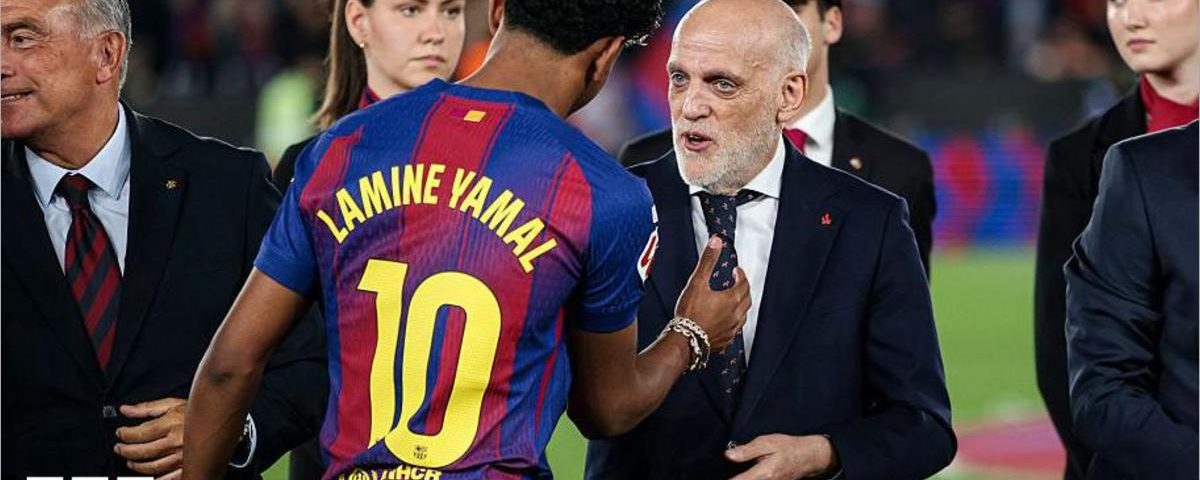
- Javier Tebas has publicly criticized FIFA for its lack of action regarding the Balogun transfer controversy.
- The situation raises questions about governance and accountability in football.
- Balogun's potential impact on La Liga could be significant, both tactically and commercially.
- The controversy underscores the ongoing friction between domestic leagues and international football governance.
- Moving forward, how FIFA addresses these issues may reshape the landscape of player transfers.
In a recent statement, La Liga president Javier Tebas expressed strong criticism of FIFA’s “complicit silence” concerning the Folarin Balogun transfer situation. This declaration came on July 7, 2026, amidst ongoing debates about player rights and transfer regulations in football. Balogun, a promising young talent, has been at the center of a contentious situation involving his transfer from a Premier League club to a La Liga side. The implications of this transfer go beyond just player movement; they touch upon the broader governance of football and its regulatory bodies.
Tebas’s remarks highlight a growing frustration within European leagues regarding FIFA’s oversight and influence. As the transfer window approaches, and clubs scramble to strengthen their squads, the Balogun case serves as a focal point for discussions about transparency and fairness in player movements. This incident is not just about one player; it encapsulates the wider tensions between domestic leagues and FIFA as they navigate the complexities of modern football.
The Balogun transfer raises critical questions about how young players are treated in the international arena. With rising transfer fees and intense competition, there is a pressing need for clearer regulations that protect both clubs and players. In this context, it is essential to consider how the transfer impacts La Liga tactically and commercially.
Tactical Breakdown: Balogun’s Role in La Liga
Folarin Balogun’s potential addition to a La Liga club could significantly alter the tactical dynamics of the team he joins. Known for his speed, technical skills, and goal-scoring ability, Balogun thrives as a versatile forward, capable of playing both centrally and on the wings. His arrival could provide a tactical flexibility that many La Liga teams crave, especially those looking to maximize their attacking potential.
In a league that often emphasizes intricate passing and movement, Balogun’s pace could exploit spaces left by defenders, particularly in the counter-attack phase. His ability to stretch defenses may be especially valuable in matches where teams sit back, looking to frustrate opponents. The key battles will likely revolve around how well he integrates into the team’s existing structure, whether it be a possession-based approach or a more direct style of play.
Moreover, Balogun’s individual skill set could complement established forwards, fostering a dynamic attacking trio that can interchange positions fluidly. For teams in the Premier League, the prospect of losing a player with such potential raises immediate concerns about how to replace his goals and contributions. The match result of any forthcoming fixtures could be heavily influenced by the tactical adjustments made in response to his transfer, making it a pivotal moment for clubs on both sides of the channel.
The Broader Implications of Transfer Governance
Tebas’s critique of FIFA also sheds light on the broader implications of transfer governance in football. As controversies surrounding player transfers unfold, it brings to the forefront the need for a more structured and transparent system that not only protects players but also ensures fairness among clubs. The current landscape is characterized by a lack of accountability, which can lead to disputes that amplify tensions between clubs and governing bodies.
The Balogun case is a reminder that the conversation surrounding player transfers is increasingly complex. With financial disparities between leagues becoming more pronounced, it is crucial for governing bodies to establish regulations that foster a level playing field. This situation serves as a bellwether for how FIFA addresses similar issues in the future, and how these resolutions could shape player movements and transfer strategies worldwide.
As we look forward, the outcome of the Balogun transfer saga may well influence future negotiations and policies regarding player rights and transfers. A failure to act may not only impact individual players but could also hinder the integrity of leagues globally. Ensuring that players are treated fairly and that clubs adhere to agreed-upon regulations will be critical in maintaining trust within the football ecosystem.
In our view, the ongoing tension between domestic leagues like La Liga and FIFA is emblematic of a larger struggle for power in football. As clubs increasingly rely on young talents like Balogun, the need for a robust framework governing transfers becomes more pressing. We believe that this particular instance will not only galvanize clubs to demand more accountability from FIFA but could also spark wider reforms in transfer regulations.<br />
Moreover, this controversy highlights the dual challenge of maintaining competitive integrity while also protecting the rights of players. As the landscape of football evolves, it will be interesting to see how FIFA adapts to these challenges. Will they embrace change and improve governance, or will they continue to navigate the murky waters of silence and complicity? The answer may ultimately reshape the future of football.
Source: La Liga chief critical of 'complicit silence' surrounding Fifa
Sports News Plus is a news aggregator. We do not own or claim rights to any images, videos, or source content featured on this site. All images and media are the property of their respective original owners and publishers. Article content is independently written based on publicly available news sources, which are credited and linked throughout. Full disclosure →