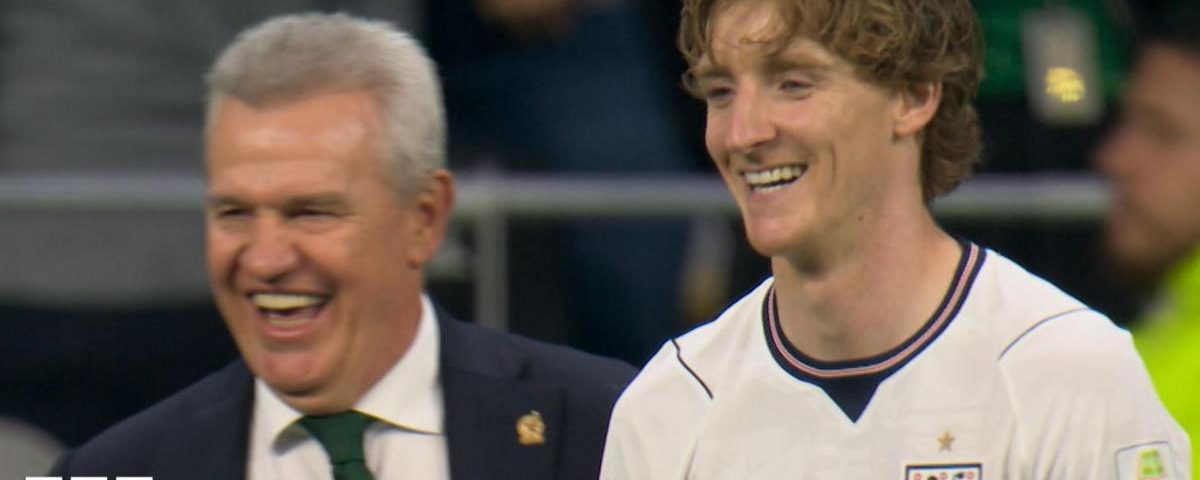
- Anthony Gordon found humor in a viral moment with Mexico's Javier Aguirre.
- The incident occurred during a high-stakes World Cup match.
- Emotional exchanges can impact player focus and team dynamics.
- Such moments can shape public perceptions of players and coaches.
- The future of international football may see more off-field antics influencing on-field performance.
Match result In a colorful exchange that has captured the attention of football fans worldwide, England winger Anthony Gordon described a recent incident involving Mexico’s head coach Javier Aguirre as “just a bit of fun.” This altercation took place during their World Cup match held on July 9, 2026, where emotions were running high. The viral moment saw Aguirre vocally expressing his frustrations, which Gordon later downplayed, suggesting there was no malice intended.
This episode shines a spotlight on the often-volatile atmosphere of international tournaments. With players and coaches under immense pressure to perform, such interactions can become focal points for media narratives. The World Cup is a stage where national pride and individual ambition collide, making even fleeting moments significant for fans and analysts alike.
When dissecting the implications of Gordon’s comments, we must consider how this reflects broader trends in contemporary football. Formerly, emotional exchanges between players and coaches were rarely discussed outside the locker room. However, in today’s digital age, instances like these quickly become sensationalized and scrutinized, influencing public opinion and potentially even team dynamics.
Pressure and Play: Emotional Dynamics in Football
The World Cup serves not only as a showcase of skill but also as a crucible for character. For players like Gordon, the stakes are higher than ever. The England squad is under constant scrutiny, and incidents like Aguirre’s outburst, while seemingly minor, can have far-reaching effects on team morale. Emotional resilience is crucial in high-pressure situations, and how players react to external stimuli—such as heckling from coaches—can impact their performance.
Gordon’s lighthearted take on the situation perhaps indicates a maturity and understanding of the game that many young players still struggle to grasp. In a pressurizing environment, finding humor can be a coping mechanism. Yet, we cannot ignore the fact that distractions, even those deemed innocuous, can sway a player’s focus. This dynamic makes it essential for teams to maintain a harmonious environment, especially during critical matches where the outcome—such as the final match result—can define careers.
As the World Cup progresses, the focus will inevitably shift to how players cope with external pressures and distractions. The ability to maintain focus amidst chaos will separate the champions from the rest. Coaches must learn to navigate these emotional landscapes, understanding that their words carry weight that extends beyond the pitch.
The Role of Media and Public Perception
Gordon’s comments highlight the delicate interplay between player experiences and media narratives. In an era where every match is dissected, analyzed, and broadcast across social media platforms, narratives can evolve rapidly. A simple interaction can fuel debates about sportsmanship, professionalism, and the character of both players and coaches.
The perception of Aguirre, for instance, may shift based on this incident. Some may view it as a sign of passion, while others could interpret it as unprofessionalism. This duality illustrates how public opinion can be influenced by moments that seem trivial on the surface. As the game becomes increasingly intertwined with media coverage, the potential for these interactions to shape a player’s brand and marketability grows.
This situation also opens the door to discussions about how players prepare for the mental challenges of high-stakes competitions. The transfer market is influenced by public perception; players who maintain a positive image and display emotional maturity may garner more attention from top clubs. As international tournaments draw scouts and agents alike, players must navigate the intricacies of their public persona as carefully as they do their on-field performance.
Looking ahead, the landscape of football will likely continue to evolve. With the rise of social media and its role in shaping narratives, we might see more players leaning into their public personas, engaging with fans in ways that were previously uncommon. This shift could redefine how players approach both the game and their interactions with coaches, teammates, and the media.
We believe that the incident involving Gordon and Aguirre exemplifies a growing trend in football where emotional exchanges are becoming part of the spectacle. In our view, this shift could have significant implications for how matches are perceived and dissected by fans and analysts alike. Rather than simply focusing on match results, the narratives surrounding player and coach interactions could lead to a more holistic understanding of the game.<br />
Moreover, this incident might inspire other players to adopt a more candid approach to their experiences on the field. As the game becomes more transparent, we could witness a shift in how emotional resilience is valued in players, potentially influencing future transfers. Clubs may begin to prioritize not just skill and physicality but also the ability to engage with fans and handle on-field distractions gracefully.
Source: Mexico boss' explicit heckle a bit of fun – Gordon
Sports News Plus is a news aggregator. We do not own or claim rights to any images, videos, or source content featured on this site. All images and media are the property of their respective original owners and publishers. Article content is independently written based on publicly available news sources, which are credited and linked throughout. Full disclosure →