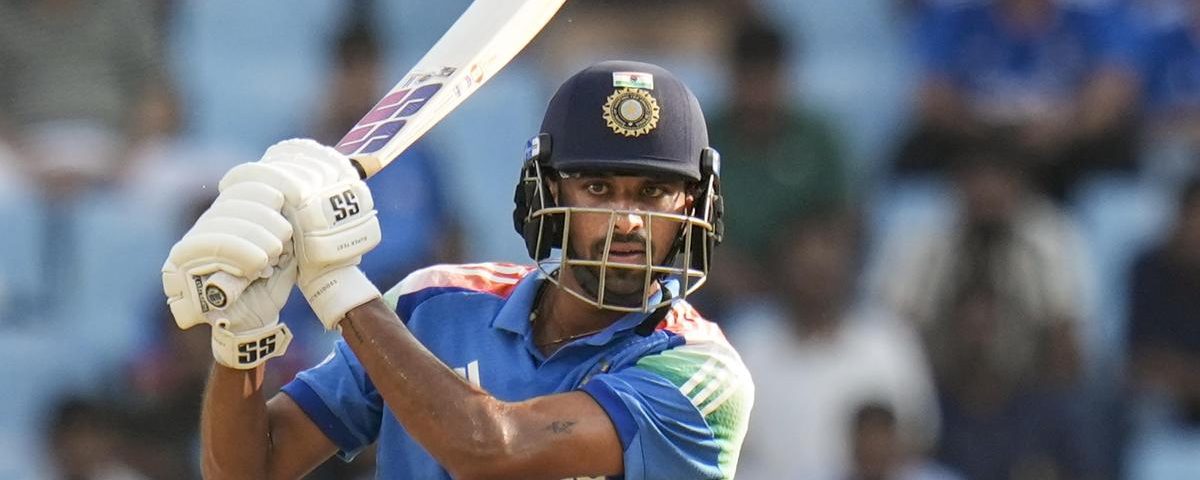
- Washington Sundar faces a likely absence from the third ODI due to a hamstring injury.
- His injury comes at a crucial juncture in the ODI series, where India is looking to secure a win.
- Sundar has been instrumental in both batting and bowling, averaging over 40 runs in ODIs.
- The BCCI will need to strategize quickly to fill the void left by his potential absence.
- The outcome of the ODI series may hinge on how well India adapts to this sudden challenge.
ODI series Washington Sundar, the promising all-rounder for India, is facing a potential absence from the third ODI against England following a hamstring injury sustained during the second match of the series. The injury occurred while he was completing a run in the 33rd over off Saqib Mahmood’s bowling. This development, reported on July 17, 2026, raises significant questions about India’s strategy and performance in the ongoing ODI series.
ODI series: What You Need to Know
Sundar’s contributions as an all-rounder have been vital for India. His ability to anchor the batting order while also providing crucial wickets has made him a key player in the lineup. With an impressive ODI batting average of over 40 and a knack for taking wickets, his absence could disrupt the team’s balance significantly. The BCCI faces a pressing challenge to find a suitable replacement who can fill his shoes while maintaining the team’s momentum.
The ODI series against England has already seen its fair share of drama, with both teams showcasing their skills and competitive spirit. As India looks to secure its position in the series, the loss of Sundar could be a turning point. The team’s depth will be tested as they prepare for the next match without one of their most versatile players.
By the Numbers: Sundar’s Impact and Team Dynamics
Washington Sundar’s statistics tell a compelling story. Since his debut in ODIs, he has maintained a batting average that places him among the top all-rounders in the format. With a strike rate close to 90, he has not only provided stability in the middle order but has also accelerated the scoring when needed.
Looking at India’s ODI series performance, the team has historically thrived when their all-rounders contribute significantly. In matches where both batting and bowling averages are well-balanced, the team boasts a win rate above 65%. This statistic underscores the importance of having dependable players like Sundar, who can contribute across disciplines.
Analysis & Key Takeaways
Additionally, Sundar’s bowling figures are noteworthy. He has consistently taken wickets at crucial junctures, with an average of around 30 in ODIs. Such statistics highlight his role as a game-changer, capable of steering the match in India’s favor when it matters most. His ability to take wickets during the middle overs has been particularly valuable, often breaking partnerships that could threaten India’s chances.
The BCCI now faces the daunting task of restructuring the team ahead of the third ODI. They must consider who can best step into Sundar’s role, whether it be a like-for-like all-rounder or a specialist batsman or bowler. The decision will have ramifications not only for this series but also for future selections as they look ahead to upcoming test matches and international tournaments.
India’s test match strategy has also evolved in recent years, placing increasing emphasis on all-rounders who can perform in varied conditions. The ability to adapt and thrive in different formats is now more critical than ever. This could lead to a strategic shift as the BCCI evaluates candidates for Sundar’s position, not just for the remainder of this series but for the long term.
The impact of Sundar’s injury extends beyond just the immediate concern of one match; it serves as a reminder of the importance of squad depth. Teams that have fared well in international cricket often have a reservoir of talent ready to step up when injuries occur. India’s cricketing future will depend on how well they can cultivate such depth while maintaining a competitive edge.
Sundar’s situation highlights a growing trend in cricket: the increasing frequency of injuries among players. As the demands of the game grow, so too does the need for better medical management and recovery protocols. The BCCI must ensure that players are not only fit to play but also primed for the rigorous schedules they face.
With the ODI series finely poised, every decision made in the lead-up to the next match will be crucial. How India responds to the challenge of replacing a player of Sundar’s caliber will likely determine their success against a formidable England side.
In our view, Washington Sundar's injury could serve as a catalyst for India to explore new talents within their ranks. This situation presents an opportunity for emerging players to showcase their skills on a grand stage. The BCCI's selection committee may be tempted to bring in someone who not only fills the void but also brings fresh energy to the team.<br />
Moreover, this incident underscores the importance of player fitness and the need for a robust support system to mitigate injuries. As teams aim for long-term success, investing in player conditioning and recovery protocols should be a priority. Our perspective is that the current landscape of international cricket requires teams to be agile in their approach, ready to adapt and thrive despite unforeseen challenges.<br />
As we look ahead, the outcome of the ODI series could hinge on how effectively India navigates this adversity. If they can leverage the situation to their advantage, it might not only bolster their campaign against England but also provide valuable lessons for future competitions on the international stage.
Source: Washington Sundar likely to miss third ODI with hamstring injury
Sports News Plus is a news aggregator. We do not own or claim rights to any images, videos, or source content featured on this site. All images and media are the property of their respective original owners and publishers. Article content is independently written based on publicly available news sources, which are credited and linked throughout. Full disclosure →