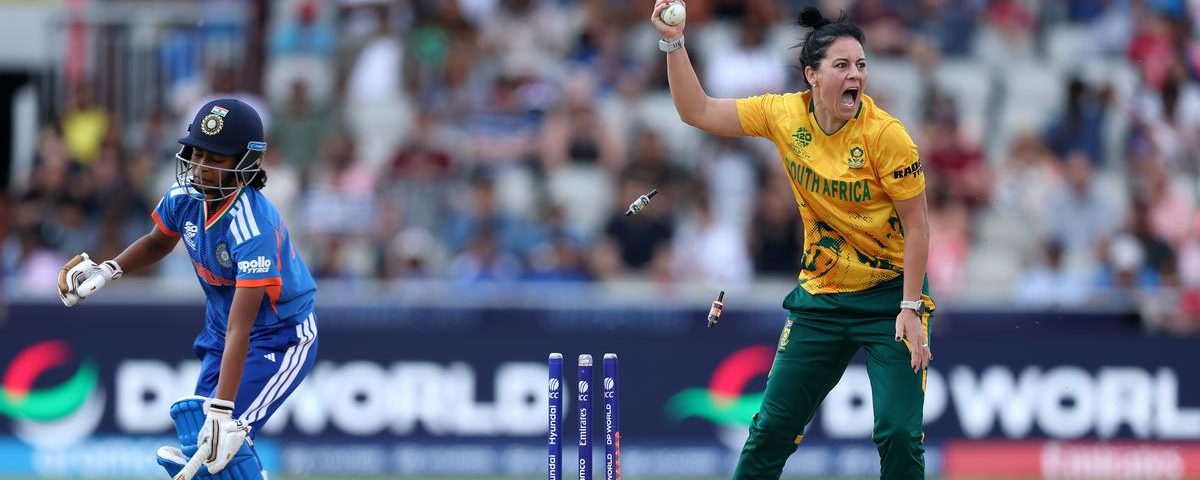
- South Africa defeated India by six wickets in the Women's T20 World Cup 2026.
- Marizanne Kapp scored an impressive 81 runs off 45 balls and took two wickets.
- India's batting struggles continued, contributing to their defeat.
- The victory keeps South Africa's hopes alive for advancing in the tournament.
- BCCI faces pressure to reassess strategies after this disappointing result.
In a crucial encounter for the Women’s T20 World Cup 2026, South Africa secured a significant victory over India, winning by six wickets on June 21. The match took place at a packed venue, where fans witnessed a stellar performance from Marizanne Kapp, who not only contributed with the bat but also made key breakthroughs with the ball. This victory not only boosted South Africa’s chances in the tournament but also raised questions about India’s current form and strategy.
Marizanne Kapp was the standout performer, showcasing her dual capabilities as both a batswoman and bowler. Her unbeaten 81 runs off just 45 balls were pivotal in guiding her team to a successful chase. Additionally, Kapp’s two wickets were instrumental in breaking the momentum of the Indian batting order. The match was a stark reminder of the fine margins in T20 cricket, where one player can often dictate the outcome.
India’s performance, on the other hand, highlighted several tactical shortcomings. The team struggled with both their batting and bowling strategies, leading to an inadequate score that South Africa chased down comfortably. The Board of Control for Cricket in India (BCCI) will undoubtedly be scrutinizing these performances closely, as the pressure mounts on the squad to deliver in high-stake matches.
Tactical Breakdown
Analyzing the tactical dimensions of the match, several key factors played a crucial role. South Africa employed a balanced approach, utilizing Kapp’s all-round abilities to strengthen both their batting and bowling. From the outset, they focused on creating pressure with aggressive field placements and disciplined bowling. Kapp’s varied bowling style kept the Indian batters guessing, leading to crucial breakthroughs at key moments.
India’s batting order, meanwhile, seemed disjointed and lacked the synergy required in T20 formats. The top order struggled to build partnerships, and the middle order faltered under pressure. A failure to adapt to the match conditions and capitalize on powerplay overs ultimately hampered their chances. The lack of a solid foundation meant that the lower order was unable to recover, further emphasizing the need for a more cohesive batting strategy moving forward.
Moreover, the match showcased the importance of adaptability in T20 cricket. South Africa’s ability to adjust their game plan mid-match, switching between aggression and caution as required, was a clear factor in their success. In contrast, India’s rigidity in their approach may have contributed to their downfall.
As the tournament progresses, the BCCI and Indian team management will need to reassess their strategies. They must find ways to instill greater resilience and adaptability within the squad. With several matches left in the tournament, there is still a chance for India to regroup and leverage their talent effectively, but this defeat serves as a stark wake-up call.
Future Implications
Looking ahead, this match may serve as a turning point for both teams. For South Africa, the victory will bolster confidence and provide momentum as they aim to advance deeper into the tournament. The tactical lessons learned from this encounter will undoubtedly be valuable in their upcoming fixtures.
Conversely, India’s need for introspection cannot be overstated. The recent performances have led to questions about team selection, strategy, and player form. As the BCCI navigates these challenges, the focus will be on fostering a resilient mindset among players to adapt to the pressures of international T20 cricket. The road to recovery will be tough, but the potential for a comeback remains, provided the team can effectively address its weaknesses.
The T20 World Cup is known for its unpredictability, and as such, every match counts. For the fans and analysts alike, this clash between South Africa and India has set the stage for an exciting finish to the tournament, with both teams having much to prove in the coming matches.
As we reflect on this match, it’s clear that the dynamics of T20 cricket require not just skill but also tactical acumen. The pressures of high-stakes matches can often lead to unexpected outcomes, and this game was no exception. South Africa's ability to execute their plan under pressure speaks volumes about their preparation and mindset going into the tournament.<br />
Meanwhile, the Indian team must embrace a more flexible approach. We believe that a shift towards a more dynamic batting strategy, coupled with a focus on building partnerships, could be crucial for their success in future matches. The BCCI has a pivotal role to play in this transformation, ensuring that the players are not only technically equipped but also mentally prepared for the challenges ahead. The tournament is still wide open, and it will be fascinating to see how both teams adapt moving forward.
Source: India ‘Kapp’itulates as South Africa wins by six wickets in Women’s T20 World Cup 2026
Sports News Plus is a news aggregator. We do not own or claim rights to any images, videos, or source content featured on this site. All images and media are the property of their respective original owners and publishers. Article content is independently written based on publicly available news sources, which are credited and linked throughout. Full disclosure →