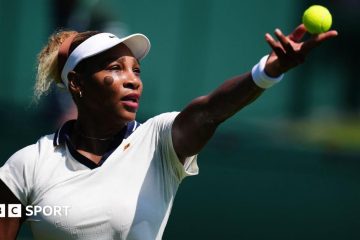
- Toby Samuel executed a service game in just 55 seconds during his semi-final at Eastbourne.
- This remarkable feat highlights Samuel's impressive serve and tactical prowess on the court.
- Quick service games can shift momentum and influence match results significantly.
- Samuel's performance positions him as a rising star in the ATP rankings.
- If he maintains this level of play, he could become a strong contender in upcoming Grand Slam events.
Grand Slam In an impressive display of efficiency and skill, Great Britain’s Toby Samuel won a service game in just 55 seconds during his semi-final match against Zizou Bergs at the Eastbourne tournament on June 26, 2026. This remarkable achievement not only underscores Samuel’s developing prowess on the ATP tour but also raises questions about the broader implications for his future performances, particularly as he aims for a breakthrough at the Grand Slam level.
Service games are crucial in tennis, as they can dictate the flow and momentum of a match. Samuel’s ability to secure a game in under a minute demonstrates his focus and precision, allowing him to apply immediate pressure on his opponents. This level of performance can be pivotal, especially during high-stakes matches, as it can mentally unnerve the opponent while boosting the server’s confidence.
The Eastbourne tournament serves as a prime platform for players to sharpen their skills ahead of the grass-court season leading to Wimbledon. Known for its fast-paced surface, Eastbourne presents unique challenges, demanding not only powerful serves but also agile net play. Samuel’s rapid service game is testament to his strategic preparation and adaptability, qualities essential for any player aspiring to climb the ATP rankings.
Tactical Breakdown
Delving deeper into the tactical aspects of Samuel’s service game, we can observe several key elements that contributed to his success. First, his serve speed and placement are paramount. By delivering a strong serve mixed with strategic placement, he can limit the opponent’s response options, making it easier to dictate the point from the outset. Samuel’s ability to serve into the body or aim for the corners can disrupt his opponent’s rhythm, a tactic often employed by top players in the ATP circuit.
Moreover, the speed at which he dispatched the service game speaks to an aggressive mindset. Players like Samuel thrive on maintaining pressure, and winning service games quickly can lead to a psychological advantage. When a server can win games with such efficiency, it forces the returner to adapt rapidly, often leading to errors. During this semi-final, Samuel’s game plan likely revolved around maintaining a high first-serve percentage and following it up with aggressive groundstrokes, capitalizing on any weak returns from Bergs.
Additionally, Samuel’s footwork and positioning were likely crucial in his ability to hit quick serves. Effective footwork allows a player to set up for the next shot immediately, minimizing the time the opponent has to react. This aspect of his game is particularly vital as he transitions into more significant tournaments, where every point counts.
The Road Ahead for Samuel
As Samuel continues to refine his game, his recent performance at Eastbourne suggests that he could soon make waves on the WTA tour. His quick service games and overall aggressive playstyle position him well for the upcoming Grand Slam events. If he can sustain this form, he may not only improve his ATP ranking but also cement his status as a serious contender in future tournaments.
The ability to execute rapid service games could become a hallmark of Samuel’s play, similar to how players like Ivo Karlovic and John Isner have utilized their serves to dominate matches. If Samuel can blend this power with strategic finesse, he will likely find success on the biggest stages of tennis.
Moreover, the current landscape of men’s tennis is ripe for new contenders, especially with the established stars gradually transitioning out of their prime. Players who can capitalize on their strengths while adapting to the evolving game will find opportunities to challenge for major titles. Samuel’s performance at Eastbourne positions him favorably as he looks ahead to the Grand Slam circuit.
In conclusion, Toby Samuel’s rapid service game is more than just a statistical anomaly; it represents a blend of tactical acumen and mental fortitude that could define his career trajectory. As he prepares for future competitions, including Grand Slam tournaments, observers will be keen to see if he can maintain this high level of performance and translate it into match results that further elevate his standing in the ATP rankings.
At the SNP editorial desk, we see Toby Samuel's rapid service game as a potential turning point in his career. His ability to execute plays so swiftly not only showcases his technical skills but also hints at a broader evolution in his playing style. The quick service game reflects a trend we’re witnessing in professional tennis, where mental fortitude and quick decision-making can make all the difference.<br />
Looking ahead, we anticipate that if Samuel can replicate this level of play, he may soon be competing not just for titles on the ATP tour but also making a significant run in Grand Slam events. His style could resonate well with the fast-paced demands of grass courts, particularly at Wimbledon, which could be the perfect stage for him to announce his presence as a serious contender in the years to come.
Source: Samuel wins service game in under a minute
Sports News Plus is a news aggregator. We do not own or claim rights to any images, videos, or source content featured on this site. All images and media are the property of their respective original owners and publishers. Article content is independently written based on publicly available news sources, which are credited and linked throughout. Full disclosure →