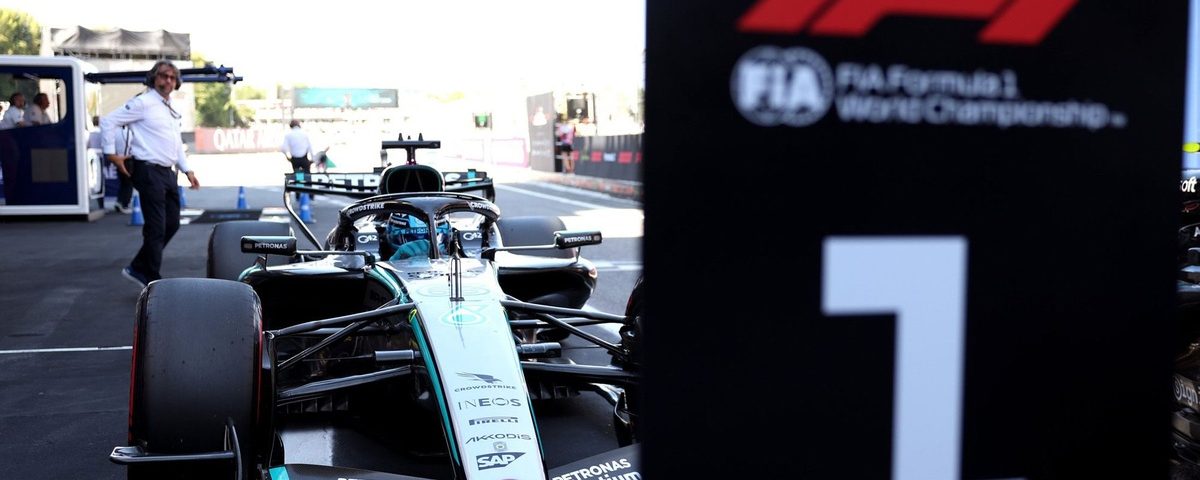
- George Russell secured pole position at the 2026 Formula 1 Barcelona Grand Prix.
- This marks Russell's third pole of the season, surpassing teammate Lewis Hamilton.
- Kimi Antonelli, who was dominant in earlier races, finished third in qualifying.
- Russell's performance reaffirms his competitiveness in the ongoing championship battle.
- Historical trends suggest that pole position often correlates with race success, indicating Russell's potential for victory.
In a thrilling turn of events during the 2026 Formula 1 season, George Russell claimed pole position for the Barcelona Grand Prix, held on June 13, 2026. Russell’s impressive lap time of 1m14.679s edged out his Mercedes teammate Lewis Hamilton by a mere 0.064 seconds, with Kimi Antonelli, who has been a key player in the championship, trailing behind in third place. This qualifying session not only highlights Russell’s growing prowess in the sport but also sets the stage for an exciting race that could have significant implications for the championship standings.
This pole position marks Russell’s third of the season, a notable achievement that reflects both his skill and the competitive edge of the Mercedes team. As the 2026 championship continues to unfold, this moment is pivotal, especially considering the season-long rivalry that has developed between Russell and Hamilton, alongside the emerging talent of Antonelli. The dynamics of the race and the potential outcomes will be closely analyzed, especially given the historical significance of pole positions in determining race results.
Historical Context: Pole Positions and Race Outcomes
To understand the weight of Russell’s achievement, it’s essential to delve into the historical trends of Formula 1, particularly regarding pole positions and their correlation with race success. In the modern era of Formula 1, securing pole is often seen as a critical advantage. For instance, in the 2021 season, Lewis Hamilton captured pole at the same venue, leading to a decisive victory. This trend isn’t isolated; historically, drivers who start from pole position have a significantly higher likelihood of finishing in the top spots.
Moreover, the 2019 German Grand Prix serves as a cautionary tale about the unpredictability of race outcomes. Despite starting from pole, Hamilton faced a dramatic race filled with challenges that eventually led to a surprising victory for a competitor. This indicates that while pole position provides a strategic advantage, it does not guarantee a race win. Russell’s situation can be likened to the 2018 season when Charles Leclerc, during his breakout year, showcased his speed in qualifying but faced difficulties in converting that into race wins.
As we look at Russell’s pole in Barcelona, the history of F1 tells us that a strong qualifying performance can bolster a driver’s confidence and momentum, but it also raises the stakes. The pressure to deliver on race day increases, especially against formidable rivals like Hamilton and Antonelli. The outcome of the race will not only affect the championship standings but will also set the tone for the remainder of the season.
The Championship Landscape
The implications of this pole position extend far beyond just the immediate race. Russell’s performance could signify a turning point in the championship race for 2026. As the season progresses, the psychological dynamics between teammates and rivals become critical. The Mercedes team has historically thrived under pressure, and with both Russell and Hamilton pushing each other, the team’s competitive spirit could yield positive results.
With Antonelli, who has shown remarkable form this season, starting third, the race will undoubtedly be a tactical battle. A strong start could allow Russell to maintain his lead, but the pressure from behind will be palpable. The strategic decisions made during the race—tire choices, pit stop timing, and race pace management—will play a pivotal role in determining the outcome.
In the context of the broader championship, this pole position could serve as a catalyst for Russell. Establishing himself as a legitimate contender is crucial not just for his confidence but also for the team’s dynamics. The battle for the championship is far from over, and each race will contribute to the narrative that unfolds as we approach the season’s climax.
As we analyze the implications of Russell's pole position, it's clear that this moment could reshape the trajectory of the 2026 Formula 1 season. Russell’s ability to consistently challenge Hamilton could indicate a shift in team dynamics, potentially leading to a more pronounced rivalry within Mercedes. This is reminiscent of past seasons when teammate rivalries have either propelled or hindered their championship aspirations.<br />
Looking ahead, if Russell manages to convert this pole into a race win, it could establish him as the primary contender for the championship, challenging the long-held dominance of Hamilton. The psychological factors at play will be fascinating to watch—can Russell handle the pressure of leading the charge against a seasoned champion? Conversely, Hamilton’s experience could be a crucial factor in how the race unfolds. Our expectation is that the outcome of the Barcelona Grand Prix will either affirm Russell's status as a title contender or solidify Hamilton's position as the team's leading driver.
Source: F1 Barcelona GP: Russell beats Hamilton to pole as Leclerc crashes
Sports News Plus is a news aggregator. We do not own or claim rights to any images, videos, or source content featured on this site. All images and media are the property of their respective original owners and publishers. Article content is independently written based on publicly available news sources, which are credited and linked throughout. Full disclosure →