- Racing Bulls is utilizing its VCARB 03 power unit more effectively than Red Bull this season.
- The team's performance in the first two races has revealed their strategic advantage in overtaking resistance.
- Historical parallels show that strong starts can lead to championship contention.
- Red Bull faces significant pressure to adjust its strategy in response to Racing Bulls' dominance.
- The evolving dynamics may signal a more competitive season ahead in Formula 1.
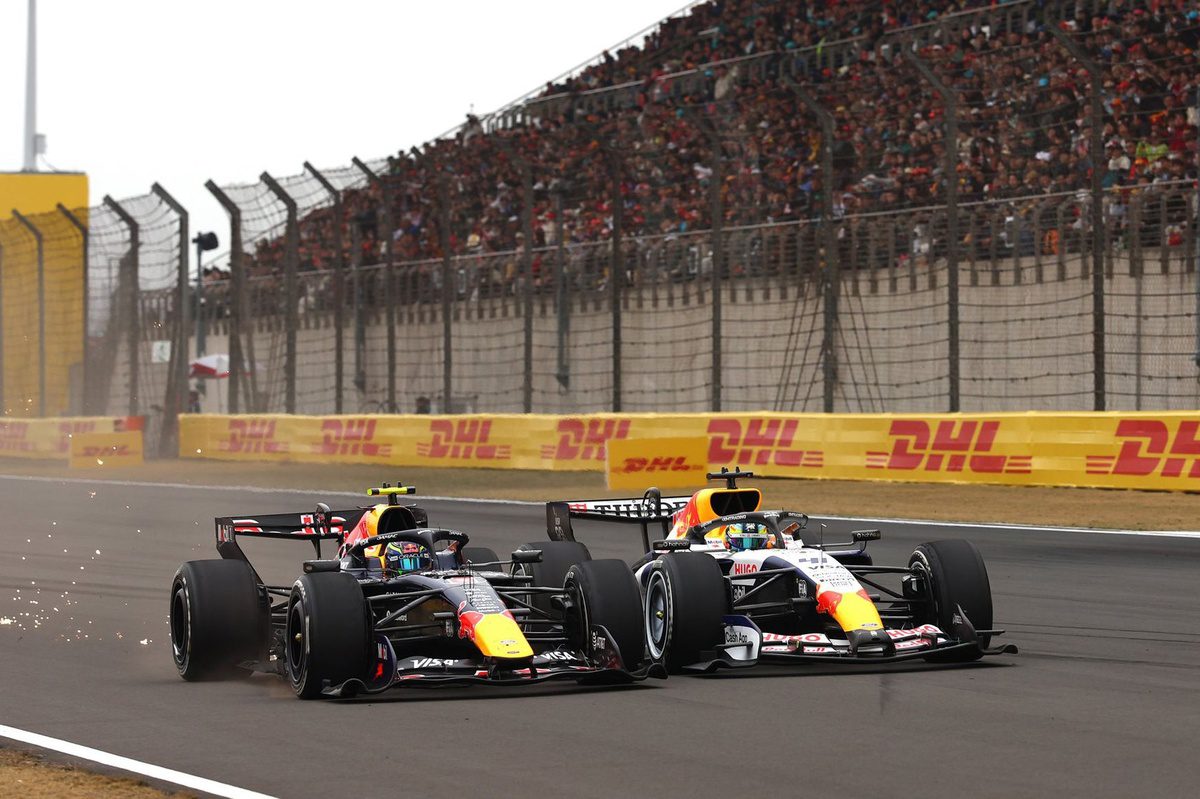
The 2026 Formula 1 season is off to a thrilling start, with Racing Bulls showcasing an unexpected mastery of its F1 power unit, the VCARB 03. Following the first two races in Bahrain and Australia, it has become increasingly evident that Racing Bulls is exploiting its power unit more effectively than its rival, Red Bull Racing. The circuit in Melbourne, known for its challenging overtaking conditions, highlighted this trend, as Racing Bulls proved to be one of the most difficult cars to pass on the grid. As the teams prepare for the upcoming race in China, the implications of this performance are becoming a focal point in the F1 news.
Historical Context: The Rise and Fall of Power Unit Dominance
To understand the significance of Racing Bulls’ current advantage, it is essential to place this scenario within a historical context. The world of Formula 1 has seen similar situations arise in the past, where a team capitalizes on its power unit and chassis design to create a competitive edge.
Take, for instance, the 2014 season, when Mercedes debuted its turbocharged hybrid power unit. The team dominated the championship, leaving competitors struggling to keep pace. This historic performance set a new precedent for power unit efficiency and aerodynamics, shaping the future of Formula 1 technology.
In contrast, the 2019 season demonstrated the perils of early-season dominance when Ferrari showed exceptional pace at the start of the year, only to falter as the season progressed. Their struggle to maintain that advantage highlights the volatility of F1 dynamics—what begins as a promising lead can quickly dissipate under pressure from rival teams.
As Racing Bulls begins its journey as the surprise frontrunner, the historical outcomes of such scenarios suggest a mix of caution and optimism. While they may enjoy a strong start, the true test will be their ability to maintain that momentum throughout the championship.
The Competitive Landscape Shifts
With teams like Racing Bulls rising to prominence, the competitive landscape of Formula 1 is shifting. Red Bull, a team synonymous with success and innovation, finds itself in a potentially precarious position. The initial race results suggest they may need to reevaluate their strategies, particularly in terms of car setup and race management.
The VCARB 03 has demonstrated remarkable overtaking resistance, making it a formidable opponent on the track. This characteristic not only places pressure on Red Bull drivers but also forces them to adopt more aggressive strategies to secure race results. The implications of this shift extend beyond individual races; they could redefine the championship race dynamics as teams adapt to counter new threats.
Moreover, as the season unfolds, it will be interesting to see how Racing Bulls maintains its advantage. Will they continue to innovate and adapt, or will the pressures of competition create vulnerabilities? In Formula 1, the landscape can change dramatically from race to race, and the ability to stay ahead is crucial for championship aspirations.
As we look ahead to the next races, the excitement mounts. The 2026 season promises to deliver not just thrilling races but a narrative of competition that could rival some of the sport’s most storied chapters.
Conclusion
The early races of the 2026 Formula 1 season have set the stage for an exhilarating championship battle. Racing Bulls’ effective utilization of its F1 power unit has positioned it as a serious contender against Red Bull, raising questions about the latter’s ability to adapt in a rapidly evolving environment. The historical context reveals that early-season success can either lead to championship glory or serve as a warning of the challenges ahead. As the season continues, fans and analysts alike will be watching closely to see how this narrative unfolds.
As we observe the unfolding dynamics of the 2026 Formula 1 season, it's clear that the balance of power is shifting. The success of Racing Bulls could serve as a catalyst for a more competitive environment, pushing established teams like Red Bull to innovate rapidly. In our view, this season could mark a significant turning point in F1 history, reminiscent of the early hybrid era but with a new challenger at the forefront.
Source: Where Racing Bulls is exploiting its F1 power unit better than Red Bull
Sports News Plus is a news aggregator. We do not own or claim rights to any images, videos, or source content featured on this site. All images and media are the property of their respective original owners and publishers. Article content is independently written based on publicly available news sources, which are credited and linked throughout. Full disclosure →