- McLaren's drivers, Oscar Piastri and Lando Norris, qualified seventh and eighth in Monaco.
- The team faces significant performance gaps, finishing over half a second behind the pole sitter.
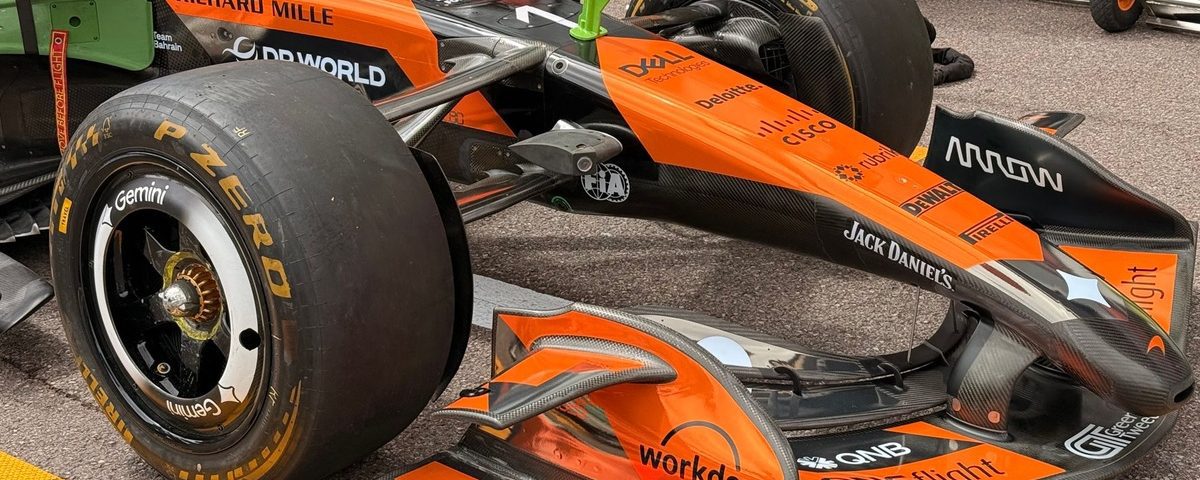
- The new front wing design has been identified as needing further refinement.
- This performance continues a trend of struggles for McLaren in the current championship.
- Looking ahead, McLaren must accelerate development to remain competitive in the Formula 1 season.
Formula 1 The Monaco Grand Prix weekend proved to be a challenging one for McLaren, with drivers Oscar Piastri and Lando Norris securing seventh and eighth positions in the qualifying session. This event, held on June 7, 2026, at the iconic Circuit de Monaco, highlighted the ongoing difficulties McLaren faces in the highly competitive world of Formula 1. With Mercedes’ Kimi Antonelli claiming pole position, the gap between McLaren and the front-running teams has widened, raising concerns about their current trajectory in the championship.
Formula 1: What You Need to Know
Qualifying is a crucial aspect of Formula 1, often setting the stage for race results. In Monaco, a circuit known for its narrow passages and limited overtaking opportunities, securing a solid grid position is even more critical. McLaren’s qualifying results, which saw them lagging over half a second behind the Mercedes, underscore the team’s struggles to find the pace needed to compete effectively at the front. The introduction of a new front wing, intended to enhance aerodynamics and increase downforce, has not delivered the expected performance gains, prompting engineers to reevaluate their design approach.
The frustration within the McLaren camp is palpable as they seek to address these performance issues. The team has historically been a key player in Formula 1, but in recent seasons, they have faced a series of setbacks that have hindered their ability to challenge for podiums consistently. The Monaco qualifying results are not merely a reflection of a single race; they represent a broader trend of competitive challenges that could have long-term implications for their championship aspirations.
The aerodynamic performance of a car is critical in Formula 1, and a well-designed front wing can significantly impact lap times. In Monaco, where precision is key, every fraction of a second counts. McLaren’s engineers have acknowledged the shortcomings of the new front wing design, suggesting that it needs “a bit more work.” This admission points to the complex nature of car development in Formula 1, where even minor adjustments can lead to substantial improvements—or setbacks.
Analysis & Key Takeaways
As the season progresses, the implications of McLaren’s current performance could be significant. The team must not only refine their recent changes but also work on enhancing the overall package of the MCL40 to regain lost ground. With the championship race heating up, the pressure is on McLaren to find a competitive edge.
The difficulties encountered by McLaren are set against the backdrop of a highly competitive season in Formula 1. Rivals are not standing still; teams like Mercedes, Red Bull, and Ferrari continue to innovate, making it increasingly challenging for McLaren to keep pace. The current state of affairs indicates that unless McLaren can make significant strides in their development program, they risk falling further behind in the race for points and positions in the championship standings.
The upcoming races will be vital for McLaren as they look to gather momentum and regain their footing in the championship. The pressure on Piastri and Norris will undoubtedly increase as they strive to convert their potential into results on the track. The Monaco Grand Prix serves as a stark reminder that in Formula 1, the margin between success and failure can be razor-thin, and continuous improvement is essential for any team hoping to compete at the highest level.
Looking ahead, it will be fascinating to see how McLaren responds to these recent setbacks. The team’s commitment to refining their car, particularly the front wing, will be critical in determining their trajectory in the championship. As McLaren continues to work on optimizing their performance, fans and analysts alike will be watching closely to see if they can reclaim their status as one of the sport’s top contenders.
At our editorial desk, we believe that McLaren's current situation reveals more than just technical challenges; it highlights a critical juncture for the team. With the potential of both Piastri and Norris, the expectation is that the team should be able to compete within the top tier. However, consistent underperformance in qualifying not only affects race day strategies but also impacts team morale and long-term development plans.<br />
Looking forward, we predict that McLaren must adopt a more aggressive approach to car development. They need to prioritize not just aerodynamic efficiency but also the drivers' feedback to create a car that inspires confidence on the track. The upcoming races will provide a litmus test for McLaren's engineering team and whether they can adapt quickly enough to keep pace with their rivals. If they fail to close the gap, McLaren's hopes of returning to the top of Formula 1 could be dashed.
Source: Why McLaren’s new front wing needs “a bit more work”
Sports News Plus is a news aggregator. We do not own or claim rights to any images, videos, or source content featured on this site. All images and media are the property of their respective original owners and publishers. Article content is independently written based on publicly available news sources, which are credited and linked throughout. Full disclosure →