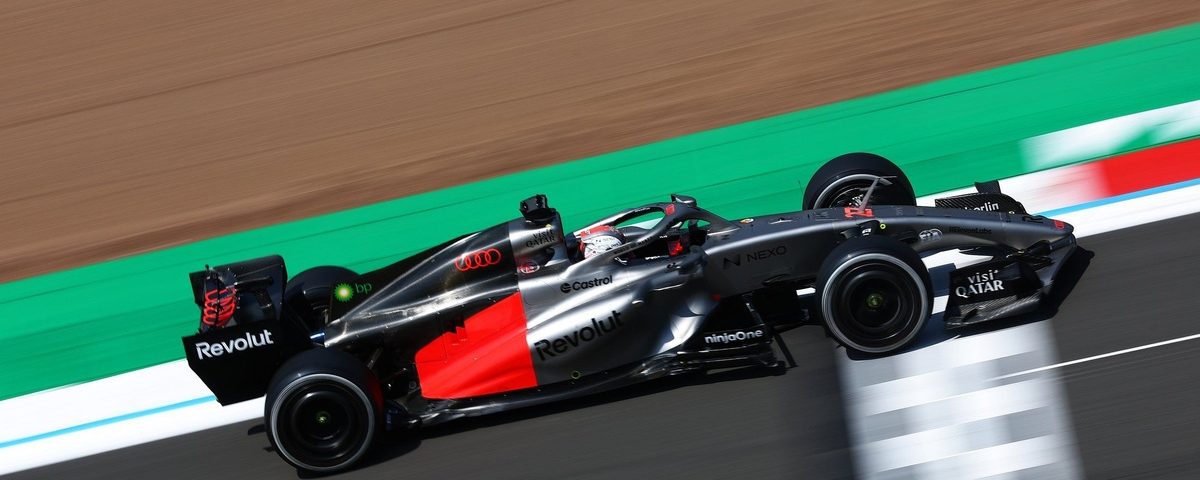
- Audi targets a Formula 1 championship by 2030, aiming high in their debut season.
- Currently, Audi sits ninth in the standings with only six points.
- The team is spearheaded by rookie Gabriel Bortoleto alongside veteran Nico Hulkenberg.
- Historical parallels can be drawn from other teams' entries into Formula 1.
- Audi's ambitious goal may reshape their strategic development over the coming seasons.
In an exciting development for motorsport enthusiasts, Audi has outlined its intention to compete for the Formula 1 championship by 2030. Audi’s boss, Mattia Binotto, announced this ambitious goal amid their first season in the prestigious racing series, which commenced with the team’s takeover of Sauber’s grid position for the 2026 season. As of mid-July 2026, Audi finds itself in a challenging position, currently sitting ninth in the standings with just six points to its name, thanks in part to the performances of rookie driver Gabriel Bortoleto.
This goal marks a significant moment for Audi, who have made a notable entry into Formula 1, a series renowned for its fierce competition and technological advancements. The team’s current points tally is a testament to the challenges faced by newcomers in a highly competitive environment. Veteran racer Nico Hulkenberg has yet to score points, further underscoring the hurdles that Audi must overcome on their journey to the top.
Historical Context: Learning from the Past
Audi’s pursuit of a Formula 1 championship by 2030 prompts us to reflect on similar scenarios in the sport’s history. Many teams have entered Formula 1 with grand ambitions, but the transition to success is seldom straightforward. For instance, when Toyota entered the sport in 2002, they had high expectations and significant financial backing. However, despite their investment and innovation, Toyota struggled to find consistent success, finally exiting the sport in 2009 without a single win.
Another notable example is Honda, which initially joined Formula 1 in the late 1960s. After several years of ups and downs, Honda eventually found success in the late ’80s and early ’90s, securing multiple championships with McLaren. However, they also faced challenges, leading to their exit in 2008. Honda made a return to the sport with Toro Rosso in 2018 and has since established itself as a strong engine supplier, showing that a successful comeback is possible with the right strategy and persistence.
These historical analogies highlight the complex dynamics of Formula 1, where even the most prestigious brands must navigate technical, financial, and competitive challenges. Audi’s ambitious goal could be viewed through the lens of these past entries, serving as a reminder that success in Formula 1 requires not only vision but also a commitment to continuous improvement and adaptation.
The Road Ahead: Challenges and Strategies
Looking ahead, Audi’s journey to a Formula 1 championship by 2030 will demand meticulous planning and execution. The team must focus on developing a competitive car that not only performs well in qualifying sessions but also delivers race results consistently. The difference between a good qualifying position and a strong race finish can often hinge on strategic decisions made during the event, team coordination, and the ability to adapt to changing race conditions.
Additionally, building a robust team culture and a strong driver lineup will be pivotal. Gabriel Bortoleto’s rookie season offers a fresh perspective, while Nico Hulkenberg’s experience can guide the team through the learning curves of racing at such a high level. Audi will need to invest in talent development, not just for drivers but also for engineers and technical staff who can push the boundaries of innovation.
Lastly, creating a strong partnership with suppliers and sponsors will be crucial. As we have seen with other teams, fostering relationships that promote technological advancements and financial backing can make a significant difference in achieving long-term goals. Audi’s commitment to a championship bid could also enhance its brand visibility and marketability, enabling the team to attract more supporters and resources.
In sum, Audi’s target for a Formula 1 championship by 2030 is an ambitious but not unprecedented goal. The path to achieving it will be fraught with challenges, yet history suggests that with the right strategies and dedication, success is attainable.
As we consider Audi's ambitious target, we cannot help but draw parallels with the historical context of new entries in Formula 1. The sport has often seen teams enter with bold aspirations, only to face significant hurdles along the way. While Audi boasts a rich automotive heritage and significant resources, the realities of Formula 1—where every detail matters and the competition is relentless—cannot be underestimated.<br />
Our view is that Audi's timeline, while aspirational, may need to incorporate a more measured approach. The lessons from Toyota and Honda underline that immediate success is a rarity in Formula 1, and patience coupled with strategic evolution may yield better long-term results. As Audi embarks on this journey, we hope to see them embrace the iterative process of development, focusing on gradual improvements that can culminate in championship contention, rather than rushing to meet a specific deadline.
Source: Audi targets F1 title bid by 2030
Sports News Plus is a news aggregator. We do not own or claim rights to any images, videos, or source content featured on this site. All images and media are the property of their respective original owners and publishers. Article content is independently written based on publicly available news sources, which are credited and linked throughout. Full disclosure →