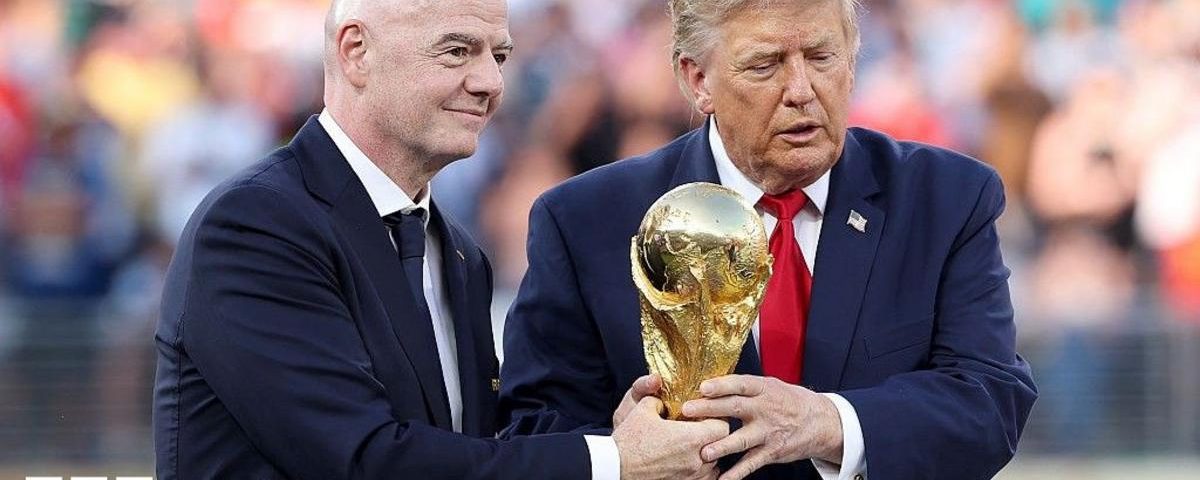
- FIFA's proposal for private investment in its competitions has raised alarms among key stakeholders.
- UEFA and Prime Minister Andy Burnham express concerns over the integrity of the World Cup.
- Historical trends show that financial motivations can impact competitive balance in football.
- The ongoing debate highlights the tension between profit and tradition in sports.
- Future World Cup funding strategies may redefine the landscape of international football.
World Cup funding In a controversial turn of events, FIFA’s plans for private investment in its competitions, including the revered World Cup, have drawn sharp criticism from UEFA and British Prime Minister Andy Burnham. This news broke on July 28, 2026, highlighting a growing rift between football’s governing bodies and the financial interests seeking to capitalize on the sport’s global appeal. While FIFA’s intentions may be rooted in securing financial stability, critics argue that the integrity and spirit of football competitions could be compromised.
World Cup funding: What You Need to Know
The proposal comes at a time when the financial landscape of football is undergoing significant transformation. With increasing broadcasting revenues and lucrative sponsorships, the allure of private investment appears tempting. However, the backlash from UEFA and political figures indicates a deeper concern: the potential influence of corporate interests on the essence of the game. Football has historically thrived on its competitive nature, and any move that could skew the playing field raises eyebrows among purists and fans alike.
By the Numbers: The Financial Landscape of Football
To understand the broader implications of FIFA’s funding proposal, it’s essential to examine the financial statistics surrounding football. In the Premier League, for instance, the average match result has shifted over the years, with a significant increase in scoring averages. Since the 2010-11 season, Premier League teams have averaged approximately 2.8 goals per match, reflecting a trend towards more dynamic, attacking football.
Furthermore, in terms of transfers, the total expenditure in the Premier League alone reached over £1.4 billion in the summer transfer window of 2023. This staggering figure illustrates how financial power can influence club performance and, ultimately, match results. As the stakes grow, the potential for financial misalignment becomes more pronounced.
Analysis & Key Takeaways
Historical data also shows that the introduction of private investment can lead to discrepancies in competitive balance. Teams like Manchester City and Chelsea have leveraged substantial financial backing to dominate the Premier League, raising questions about the sustainability of such models. The historical records indicate that the introduction of financial regulations, such as UEFA’s Financial Fair Play, has struggled to maintain equilibrium in the face of ever-increasing investment.
The Integrity Debate
The essence of football is not merely in the goals scored or the match results but also in the narratives that unfold—the underdog triumphing against the odds, the storied rivalries that ignite passions, and the sense of community fostered through shared experiences. When corporate interests begin to overshadow these narratives, the fabric of the sport risks unraveling.
Prime Minister Andy Burnham’s criticism of FIFA’s proposals underscores a growing sentiment among fans and officials: football should remain a sport for the people, not just a financial playground for investors. The idea that private funding could influence tournament outcomes or club strategies is a slippery slope that could irreparably alter how the game is perceived.
Future Implications for World Cup Funding
As the debate continues, the implications of FIFA’s funding strategies will extend beyond immediate financial gains. The World Cup, as the pinnacle of international football, carries immense weight in shaping the sport’s future. If FIFA’s approach leans too heavily on private investment, it may inadvertently alienate fans who cherish the tournament’s history and values.
While financial stability is vital, it must not come at the expense of the sport’s integrity. As we look ahead, the challenge for FIFA will be balancing the need for revenue generation with the preservation of football’s core principles. The future of World Cup funding may need to adopt a model that prioritizes transparency and community engagement, ensuring that football remains a beloved sport for generations to come.
In our view, the criticisms directed at FIFA's funding proposal highlight a critical moment in the evolution of football. We must recognize that while financial backing can enhance facilities and player development, it can also lead to a distorted playing field. The historical context suggests that when profits take precedence, the competitive spirit of football is often compromised.<br />
Looking ahead, we predict that FIFA will face mounting pressure to amend its approach. Stakeholders, including fans, players, and clubs, are unlikely to accept a shift that prioritizes financial gain over the sport's integrity. This ongoing debate will serve as a litmus test for how far FIFA is willing to go in pursuing revenue, and whether it can maintain the trust of the football community in the process.
Source: Uefa and PM criticise Infantino World Cup plan
Sports News Plus is a news aggregator. We do not own or claim rights to any images, videos, or source content featured on this site. All images and media are the property of their respective original owners and publishers. Article content is independently written based on publicly available news sources, which are credited and linked throughout. Full disclosure →