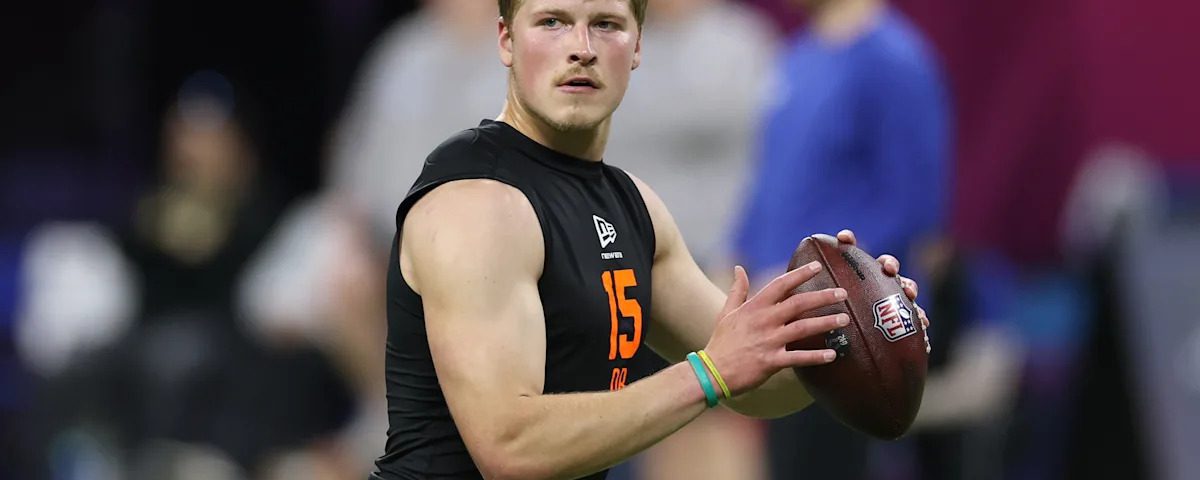
- The Eagles drafted Cole Payton, adding depth to their quarterback roster.
- Mixed reactions surround the implications for Tanner McKee, the team's current rookie.
- Payton's talent has many analysts excited about his potential impact.
- The decision reflects the Eagles' strategy to bolster their quarterback pipeline.
- How this draft choice influences the Eagles' Super Bowl aspirations remains to be seen.
NFL quarterback The Philadelphia Eagles made headlines on April 25, 2026, by drafting quarterback Cole Payton from North Dakota State University (NDSU). This decision has sparked varied reactions among analysts and fans alike, with many expressing curiosity about what this means for Tanner McKee, the Eagles’ current rookie quarterback. As the NFL continues to evolve, the addition of Payton adds a new layer of intrigue to the Eagles’ quarterback situation and the broader landscape of American football.
Payton, who showcased impressive skills during his time in college, enters a competitive environment in Philadelphia. The Eagles, a team that has recently enjoyed success in the NFL, are looking to maintain their status as contenders, especially as they set their sights on another Super Bowl. With Jalen Hurts leading the charge, the drafting of Payton signals a potential shift in the team’s long-term quarterback strategy.
As we delve into the implications of the Eagles’ draft choice, we must consider the broader context of quarterback development in the NFL. The league has seen an influx of young talent in recent years, with teams increasingly willing to invest in quarterbacks from smaller programs, such as Payton from NDSU. This trend reflects a shift in how franchises evaluate player potential, valuing skill sets and performance over traditional recruiting pipelines.
Understanding the Impact on Tanner McKee
With the addition of Cole Payton, questions arise about Tanner McKee’s role in the Eagles’ future plans. McKee was already a rookie in a challenging position, competing in a league filled with established stars and promising newcomers. By bringing in Payton, the Eagles are clearly looking to create depth and competition within the quarterback room.
Many analysts have praised Payton’s talent, suggesting that he could develop into a reliable option should anything happen to Hurts. However, this also puts additional pressure on McKee, who must now not only prove himself but also fend off a potentially formidable competitor. The Eagles’ coaching staff will have to navigate this dynamic carefully, balancing the development of both quarterbacks while ensuring team cohesion.
It’s essential to remember that the NFL is a results-driven league. The pressure to perform can lead to rapid changes in a team’s roster, often leaving young players with little time to adjust. With the possibility of a quarterback competition brewing, McKee will need to demonstrate his ability to learn quickly and adapt to the Eagles’ offensive schemes.
The Eagles’ Long-Term Quarterback Strategy
The decision to draft Payton also highlights the Eagles’ long-term approach to quarterback management. While Jalen Hurts is firmly entrenched as the starter, the organization seems keen on ensuring they have options ready to step in if necessary. This strategy echoes a broader trend in the NFL where teams are increasingly prioritizing depth at the quarterback position.
In recent years, franchises that have successfully navigated quarterback transitions have often had solid backup plans in place. The Eagles appear to be following this model, recognizing that injuries and performance fluctuations are inherent in the sport. By investing in prospects like Payton, they are positioning themselves for sustained success, regardless of the challenges that may arise.
Furthermore, as the NFL trend toward dual-threat quarterbacks continues, teams must evaluate how their signal-callers fit into a more dynamic offensive structure. Payton, known for his mobility and playmaking ability, could offer the Eagles a different dimension, enhancing their tactical flexibility down the line.
As the Eagles gear up for the next season, the story of their quarterback roster will be one to watch. The interplay between Hurts, McKee, and now Payton could have significant ramifications for the team’s performance, especially as they aim for another deep playoff run and the ultimate goal of a Super Bowl title.
The evolution of the NFL quarterback landscape is never static, and the Eagles’ proactive approach may serve as a blueprint for other teams. By embracing competition and fostering talent, they may well set themselves up for future success in the league.
In our view, the Eagles' decision to draft Cole Payton signifies a strategic pivot that could redefine their quarterback dynamics. While the immediate reactions are mixed, this move reflects a growing acknowledgment of the importance of quarterback depth in the NFL. With injuries and performance inconsistencies commonplace, having multiple capable quarterbacks is no longer an option but a necessity.<br />
As we look ahead, Payton’s arrival could either catalyze Tanner McKee to elevate his game or create a distraction that hampers his development. Given the stakes involved, the Eagles must navigate this situation prudently. The balance between competition and support within the quarterback room will be crucial as they aim to build a championship-caliber team capable of challenging for the Super Bowl.
Source: Cole Payton reactions: Eagles draft another NDSU quarterback
Sports News Plus is a news aggregator. We do not own or claim rights to any images, videos, or source content featured on this site. All images and media are the property of their respective original owners and publishers. Article content is independently written based on publicly available news sources, which are credited and linked throughout. Full disclosure →