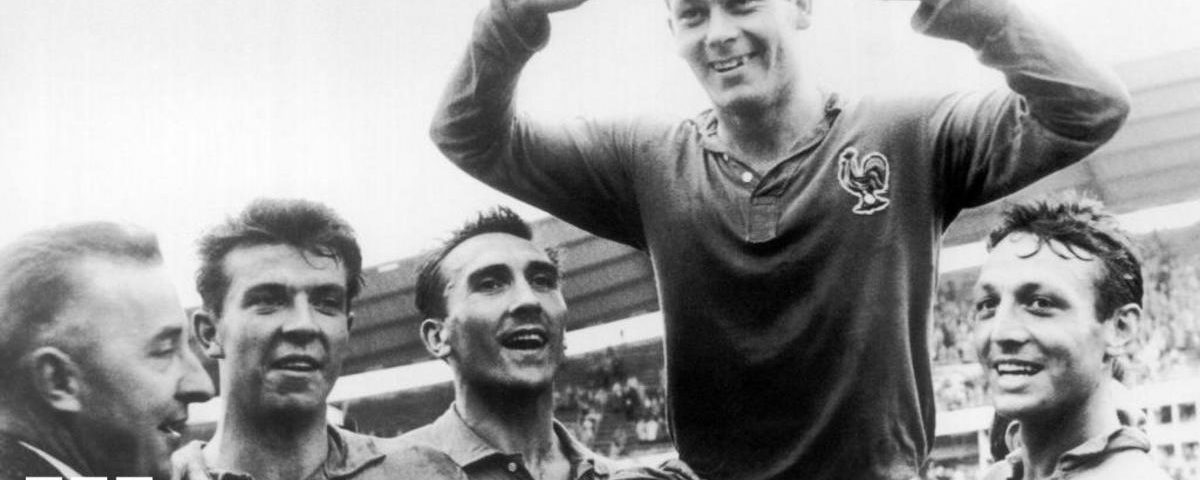
- Just Fontaine holds the record for the most goals scored in a single World Cup with 13 goals.
- His career was cut short by injury, preventing him from adding to his World Cup legacy.
- Fontaine's unique playing style emphasized quick movement and clinical finishing.
- His record remains unbroken, highlighting the evolution of football over the decades.
- The impact of his scoring ability reshapes how modern teams approach goal-scoring strategies.
World Cup goals Just Fontaine, the legendary French striker, secured his place in football history by scoring an astonishing 13 goals during the 1958 World Cup in Sweden. This record has stood untouched since then, making it one of the most revered achievements in the sport. Unfortunately, Fontaine’s international career was abruptly curtailed by injury at the young age of 28, leaving fans to ponder what more he could have accomplished had he played in subsequent tournaments. His story transcends mere statistics; it embodies the spirit and resilience of a player whose prowess on the pitch still resonates today.
Fontaine’s scoring ability was not merely a product of luck or fleeting talent; it stemmed from a deep understanding of the game and a unique tactical approach. He was known for his lightning speed, intelligent movement, and an uncanny ability to find space in crowded defenses. These qualities allowed him to exploit defensive weaknesses, often capitalizing on split-second opportunities that others might have missed. His technique and strategic mindset contributed to his remarkable goal tally during the tournament, emphasizing the importance of tactical awareness in football.
The backdrop of Fontaine’s achievements also sheds light on the evolution of football tactics over the decades. In the 1958 World Cup, teams often employed a more rigid formation, leaving space for dynamic strikers like Fontaine to exploit. This contrasts starkly with the modern game, where tactical formations are fluid, and defensive structures have become more sophisticated. The pressing game and compact defensive blocks seen in today’s Premier League matches differ significantly from the more open play of Fontaine’s era.
Fontaine’s Tactical Impact on Modern Football
To fully appreciate Fontaine’s legacy, we must analyze the tactical battles he consistently won on the field. His positioning was often a masterclass in exploiting defensive misalignments. For instance, when facing a back three, Fontaine would drop into the midfield to pull defenders out of position, creating gaps for wingers to exploit. His ability to navigate these scenarios not only amplified his scoring chances but also allowed his teammates to shine. This strategic acumen is a lesson for modern strikers, who must adapt to increasingly complex defensive schemes.
Moreover, Fontaine’s record-setting performance was a testament to the role of teamwork in football. While individual brilliance is celebrated, it is often the collaborative effort that leads to success. His French teammates created numerous opportunities through precise passing and coordinated attacks, allowing Fontaine to do what he did best—convert chances into goals. This highlights a crucial aspect of modern football: the interdependence between players. Teams in the Premier League today are recognizing that a successful striker is often surrounded by a cohesive unit that understands their movements and preferences.
As we reflect on Fontaine’s legacy, it is vital to consider the implications of his record in the context of today’s game. While the art of scoring remains paramount, the strategies surrounding it have evolved. Today’s players are often assessed not just on their goal tally but also on their ability to contribute to the team’s overall tactical framework. Clubs are increasingly seeking strikers who can adapt to various styles, whether it be pressing high, linking up play, or making runs that stretch the opposition.
The Unbroken Record and Its Significance
Fontaine’s record of 13 goals in a single World Cup continues to stand as a benchmark for aspiring strikers. In an age where players are often compared to one another across generations, his achievements remind us of the different challenges faced by players of his time. Today’s footballers train with advanced technology and analytics, yet they still find it difficult to match this extraordinary feat.
The pursuit of breaking this record has led to intense competition among the world’s best strikers, especially during major tournaments like the World Cup. Each iteration of the competition brings the question: will someone finally surpass Fontaine’s remarkable achievement? The pressure and expectations on players are immense, and while talent is a prerequisite, a mental fortitude to handle such scrutiny is equally important.
As we move forward, understanding the tactical implications of Fontaine’s style and the evolution of the game can provide insights into how modern footballers can learn from past greats. The blend of speed, intelligence, and adaptability that defined Fontaine’s game is still relevant. Young strikers today would do well to study his approach, drawing lessons not just from his goal-scoring ability but from the tactical nuances that made him a formidable opponent.
In conclusion, Fontaine’s legacy is not just about the goals he scored but also the tactical mindset he embodied. His story serves as a reminder of the importance of strategy in football and the continuous evolution of the game. As football progresses, the quest for records will remain, but it is the appreciation of tactical sophistication that will ultimately enrich the sport.
At our editorial desk, we can't help but marvel at the sheer longevity of Fontaine's record. The fact that it has stood for over six decades speaks volumes about both the player himself and the evolution of the game. As the Premier League and international football increasingly emphasize defensive tactics, it raises the question of whether we will ever see a player with the same kind of opportunistic brilliance that Fontaine displayed during the 1958 World Cup.<br />
Moreover, considering the rapid changes in player training and analytics, one might argue that the record is more vulnerable than it seems. However, the complexity of modern game strategies could very well prevent future strikers from achieving similar success. In our view, the ideal balance between technical skill and tactical awareness is the key, and as we look to the next generation of players, we hope they can channel a bit of Fontaine’s spirit while adapting to the demands of contemporary football.
Source: Borrowed shoes, no Golden Boot – the story of the World Cup's greatest scorer
Sports News Plus is a news aggregator. We do not own or claim rights to any images, videos, or source content featured on this site. All images and media are the property of their respective original owners and publishers. Article content is independently written based on publicly available news sources, which are credited and linked throughout. Full disclosure →