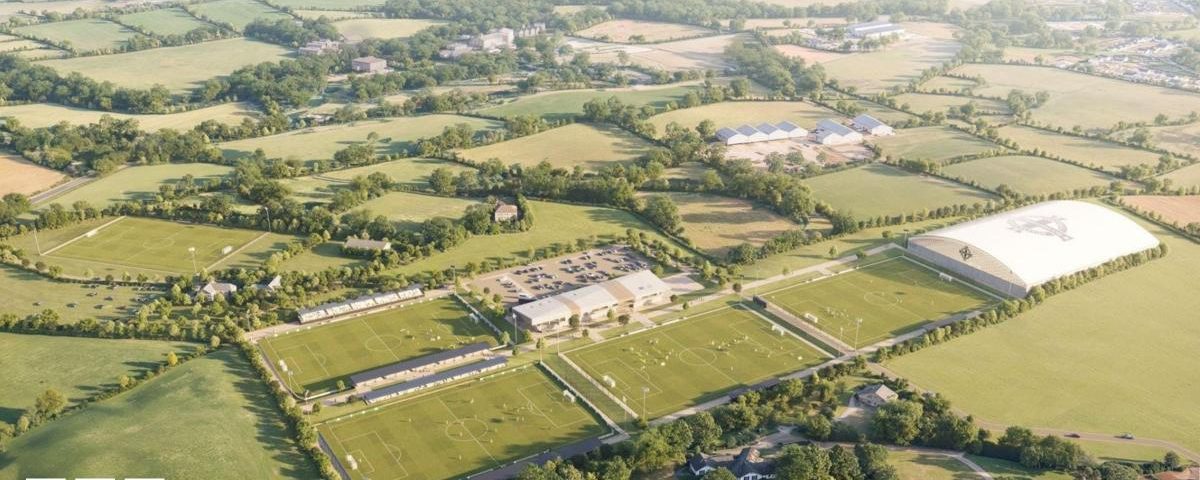
- The Irish FA has officially submitted a planning application for a new National Football Centre.
- This facility will be located on a 50-acre site in Galgorm, near Ballymena.
- The initiative aims to boost football development and training in Northern Ireland.
- Historical precedents show mixed outcomes for similar football infrastructure projects.
- If successful, the centre could significantly impact local clubs and enhance the region’s football profile.
The Irish Football Association (IFA) has taken a significant step in its mission to enhance the sport in Northern Ireland by submitting a planning application for a new National Football Centre. This ambitious project, located on a sprawling 50-acre site in Galgorm, near Ballymena, aims to serve as a hub for training, development, and community engagement. The application comes at a time when the popularity of football in the region is on the rise, and the need for high-quality facilities is more pressing than ever.
National Football Centre: What You Need to Know
The proposed National Football Centre will not only provide state-of-the-art training facilities but also cater to various age groups and skill levels, from grassroots to professional athletes. The IFA’s vision encompasses a comprehensive approach to football development, aligning with the growing demands of the sport in Northern Ireland. With the hope of fostering local talent, this initiative could lead to more competitive match results, not just for the national teams but also for local clubs participating in the Premier League and other competitions.
Historical Context: Learning from the Past
To truly understand the implications of the IFA’s recent move, one must look back at similar initiatives in football history. The establishment of training centers and academies has often been a double-edged sword. For instance, the creation of the FA’s St. George’s Park in England in 2012 marked a pivotal moment in English football. It represented a commitment to nurturing local talent and improving national team performance. However, the expected immediate success was not realized, as it took time for the benefits of the infrastructure to manifest in match results.
Another comparable instance can be found in the development of the National Training Centre in Scotland, which was launched to elevate the standard of Scottish football. Yet, despite the investment, there were challenges ahead, particularly in translating improved training environments into tangible success on the pitch, as evidenced by Scotland’s fluctuating performance in international tournaments.
Analysis & Key Takeaways
The lessons from these historical examples suggest that while the IFA’s National Football Centre has the potential to transform football in Northern Ireland, the path to success may not be as straightforward as anticipated. Infrastructure alone does not guarantee results; it requires a sustained commitment to coaching, player development, and community integration.
What Does History Tell Us?
As we analyze the potential outcomes of the IFA’s initiative, it’s essential to consider the long-term vision and the necessary steps to achieve it. The success of the National Football Centre will hinge on several factors, including effective management, community involvement, and the ability to attract and retain talent. The historical context indicates that patience and ongoing support from both the IFA and local communities will be crucial.
Moreover, the timing of this application aligns with a broader trend in football where associations are investing heavily in youth development. This can lead to a generation of players who are not only technically skilled but also understand the tactical nuances of modern football. If done correctly, the centre could serve as a catalyst for a new golden era in Northern Irish football, leading to improved match results at both club and national levels.
The establishment of such a facility may also have implications for upcoming transfer markets. As local talent is nurtured and developed, clubs in the Premier League may start to take notice, leading to increased opportunities for players to make moves that can enhance their careers. With success stories emerging from the National Football Centre, one might expect a ripple effect, drawing attention to Northern Ireland as a breeding ground for football talent.
In closing, the IFA’s endeavor to create a National Football Centre is an exciting development for the future of football in Northern Ireland. However, it serves as a reminder of the complexities of sports development. History has shown us that infrastructure investments require careful planning, community engagement, and a long-term vision to translate ambitions into reality.
As we reflect on the implications of the Irish FA's planning application, it’s clear that this initiative is about more than just a new building; it represents a strategic shift in how football is approached in Northern Ireland. We must recognize the potential for this centre to reshape the perception of Northern Irish football on both a local and international scale.<br />
While we remain cautiously optimistic, we should also consider the importance of addressing systemic issues within the sport, such as grassroots participation and coaching education. History has taught us that without a well-rounded approach, the ambitious plans could falter. Developing a robust pipeline of talent will require more than just top-notch facilities; it will necessitate a cultural shift that prioritizes football at all levels.<br />
In conclusion, as we look ahead, we believe this initiative could be a turning point for Northern Irish football. By learning from the past and implementing a comprehensive strategy, the IFA has the opportunity to not only enhance player development but also create a lasting legacy that elevates the sport across the region.
Source: IFA submits planning application for National Football Centre
Sports News Plus is a news aggregator. We do not own or claim rights to any images, videos, or source content featured on this site. All images and media are the property of their respective original owners and publishers. Article content is independently written based on publicly available news sources, which are credited and linked throughout. Full disclosure →