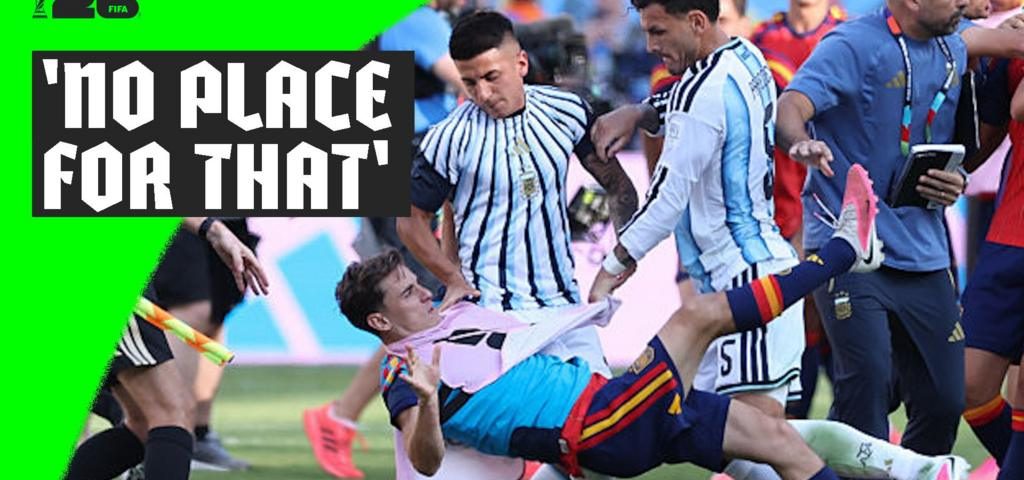
- Argentina's emotional reaction at the 2026 World Cup final underscores intense rivalry.
- This defeat marks a significant shift in the landscape of international football.
- Historical parallels reveal that similar frustrations have led to lasting impacts.
- Spain’s victory may reshape their tactical identity in future matches.
- The outcome raises questions about Argentina’s future in international tournaments.
In the thrilling conclusion of the 2026 FIFA World Cup final held in Los Angeles, Spain triumphed over the reigning champions Argentina, defeating them in extra time. The match result, which ended 3-2, was marred by a chaotic scene as frustrations boiled over among Argentina’s players. The emotional aftermath has sparked widespread discussions about sportsmanship and the volatility of competitive football at the highest level.
Frustration in football, particularly in high-stakes matches like the World Cup final, is not a new phenomenon. The emotions displayed by the Argentine players following their defeat echo similar moments in football history, where disappointment and anger have led to significant consequences both on and off the pitch. This begs the question: has such a reaction been seen before, and what can history tell us about the potential ramifications for teams and players involved?
Historical Context of Football Frustration
The landscape of football is littered with instances where the emotional stakes have led to explosive reactions. One notable example occurred during the 1990 World Cup, when Argentina faced West Germany in the final. After a contentious match that saw a late penalty awarded to West Germany, the Argentine players expressed their outrage, with Diego Maradona’s frustrations bubbling to the surface. The aftermath of that match saw Argentina’s football culture shift dramatically, leading to a period of introspection that ultimately influenced their playing style in subsequent tournaments.
Similarly, the 2006 World Cup final witnessed Italy and France clashing in a dramatic encounter that ended in a penalty shootout. Following the match, Zinedine Zidane’s infamous headbutt on Marco Materazzi showcased the emotional toll such high-pressure games can exert on players. Zidane’s reaction not only marred his legacy but also sparked discussions on the mental health of athletes under pressure, paving the way for more support systems in football.
These historical moments illustrate that intense emotions during pivotal matches often lead to lasting impacts on teams and players. The reactions observed during the 2026 World Cup final may point to a renewed focus on sportsmanship and mental resilience among athletes, highlighting the need for support systems that can help manage both the pressures of the game and the emotional responses that arise from it.
The Future of Argentina and the Implications of Defeat
The implications of Argentina’s defeat in the World Cup final extend beyond the immediate frustration felt on the pitch. Such emotional outbursts can signify deeper issues within a team’s structure and morale. For Argentina, a nation with a rich football heritage, this defeat could be a wake-up call that prompts a reevaluation of their strategies moving forward, both in terms of tactics and player psychology.
A key question remains: how will this match result affect Argentina’s future performance in international tournaments? Historically, teams that experience significant emotional upheaval tend to either regroup and emerge stronger or falter under the weight of expectations. Given Argentina’s illustrious history in football, a thoughtful analysis of the match and its aftermath is essential for their long-term success.
Spain, on the other hand, has the potential to redefine their identity following this victory. The tactical strategies employed during the final could influence their play in the upcoming UEFA Euro championships and beyond. As new stars emerge and veterans adapt, Spain’s success could set a precedent for a new era in international football, similar to their dominant run from 2008 to 2012.
Ultimately, the emotional turmoil witnessed at the end of the 2026 World Cup final serves as a reminder of the passion that football evokes across the globe. The history of the sport tells us that while such reactions may be momentary, the repercussions can reverberate for years to come.
As we reflect on the 2026 World Cup final, it’s clear that the emotional intensity displayed by the Argentine players is more than just a fleeting moment of frustration. This incident could serve as a pivotal turning point for the team in future international competitions. Our view is that Argentina must harness this emotional energy to catalyze positive changes within their squad.<br />
The historical context shows that teams often have transformative experiences following significant defeats. If Argentina can channel their disappointment into renewed motivation and strategic refinement, they could emerge stronger in upcoming tournaments. Conversely, failing to address the underlying issues could lead to a cycle of frustration that hampers their performance on the world stage for years ahead. The challenge now lies in how the team chooses to respond to this setback.
Source: 'The reaction is terrible' – World Cup final turns ugly at full-time
Sports News Plus is a news aggregator. We do not own or claim rights to any images, videos, or source content featured on this site. All images and media are the property of their respective original owners and publishers. Article content is independently written based on publicly available news sources, which are credited and linked throughout. Full disclosure →